
New Delhi: Prime Minister Narendra Modi-led NDA government has achieved many firsts in its last 12 years in power. On Friday, it added another No. 1 to that list. However, this is a “first” that the government may not be too happy about. For the first time since Prime Minister Narendra Modi came to power in 2014, his government failed to pass a bill in parliament. This was a move that could have been avoided. So the question is whether it’s part of a strategy or just bad planning.
Is the vote destined to fail?
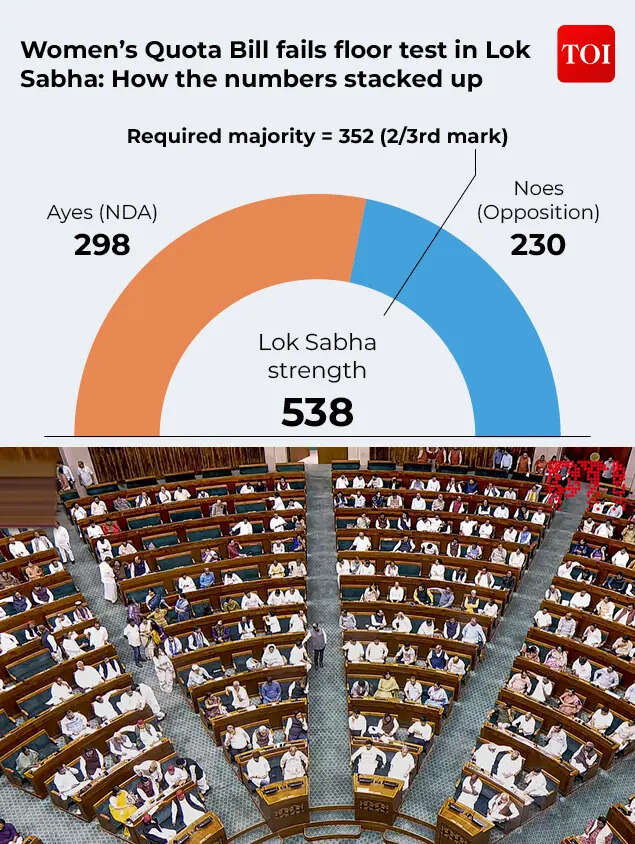
From the outset, it was clear that the government would struggle to get the roughly 360 votes needed for passage. Even with the full support of the NDA and the support of some neutrals, the numbers have not increased.
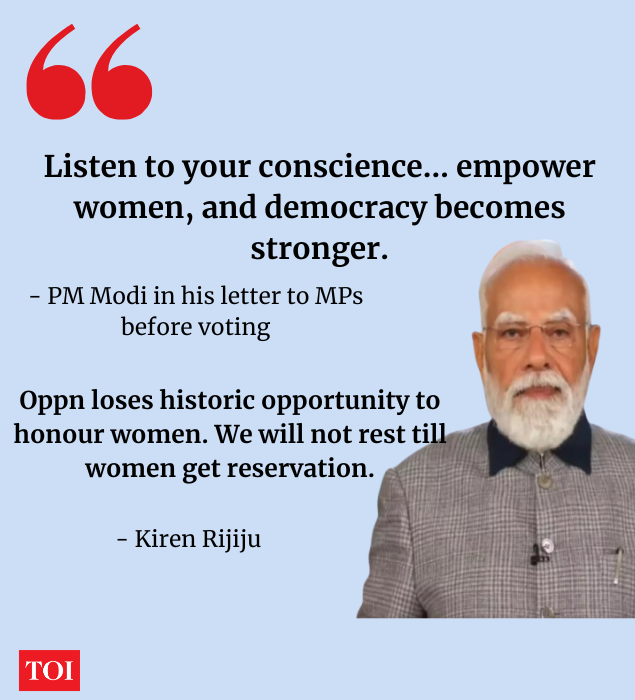
However, the Prime Minister Narendra Modi Union Home Minister Amit Shah told a debate in the Lok Sabha that the aim was not just legislative success but also political positioning.By calling a vote, the government ensures that every MP’s position is recorded. In a highly polarized political environment, the list becomes a powerful campaign tool.this is bjp Leaders described the battle as “neeyat” (intention).“We don’t need credit. I am giving you a blank check to get credit for the passage of the women quota bill. If you want me to use the word ‘guarantee’, I will use the word ‘guarantee’. If you want me to make a promise, I will use the word ‘promise’. Because if the intention is clear, there is no need to play word games,” PM Modi told the Lok Sabha during the debate.Even if it fails, the government can claim that it has done its part to push for reforms while shifting the focus to those who oppose them.In fact, after the bill was defeated, Parliamentary Affairs Minister Kiren Rijiju told the House that the opposition had lost a historic opportunity to respect women in the country, but that the Modi government would continue to fight for women’s rights.“We will not rest until we ensure reservation for women in the country’s legislative bodies,” he said.
Timing is important
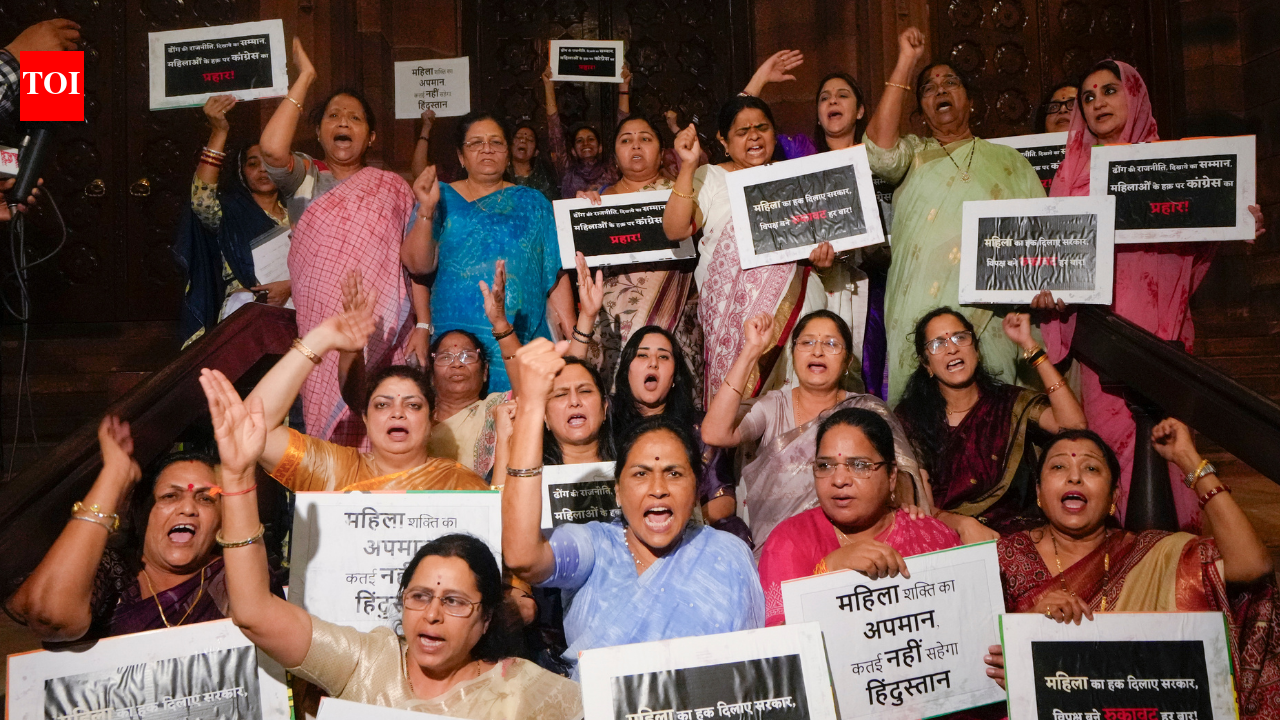
The timing of the bill is also important. With assembly elections scheduled in Tamil Nadu and West Bengal, the move could help the BJP shape the political narrative in advance.Some believe that the bill will ease the pressure to grant another OBC quota given that the issue of “social justice” has become a red cloth for the upper-caste social base of the BJP, as evident from their violent reaction to the UGC guidelines.The situation is simple: the Bharatiya Janata Party supports a bill that would ultimately ensure 33% reserved seats for women in the legislature, while the opposition parties block the bill.Amit Shah made this clear in his reply and warned those who voted against the bill that they must respond to women voters.After the polls, Shah specifically blamed the “Congress, TMC, DMK and Samajwadi Party” for not allowing the bill to pass.He said that the opposition parties were celebrating and shouting victory cries after the bill was defeated, which was beyond imagination and reprehensible.“Now, women in the country will not be able to get the 33 per cent reservation in the Lok Sabha and state assemblies, which is their right. This is not the first time that the Congress party and its allies have done this, but they have done it again and again. Their mentality is neither in the interest of women nor in the interest of the country,” he said in a Hindi post on X.Shah said this “insult to women in the country will not stop here but will spread further”.“The opposition has to face the wrath of women not just in the 2029 Lok Sabha elections but at every level, every election and everywhere,” he said.Meanwhile, a BJP source told TOI that the opposition’s “allegations have been exposed as lies”. The opposition did not budge despite Amit Shah’s offer to write a pledge regarding the South’s share in the law, indicating that they had created a conspiracy. “For the BJP, the vote provides a ready contrast: intent versus obstruction.
defining factors
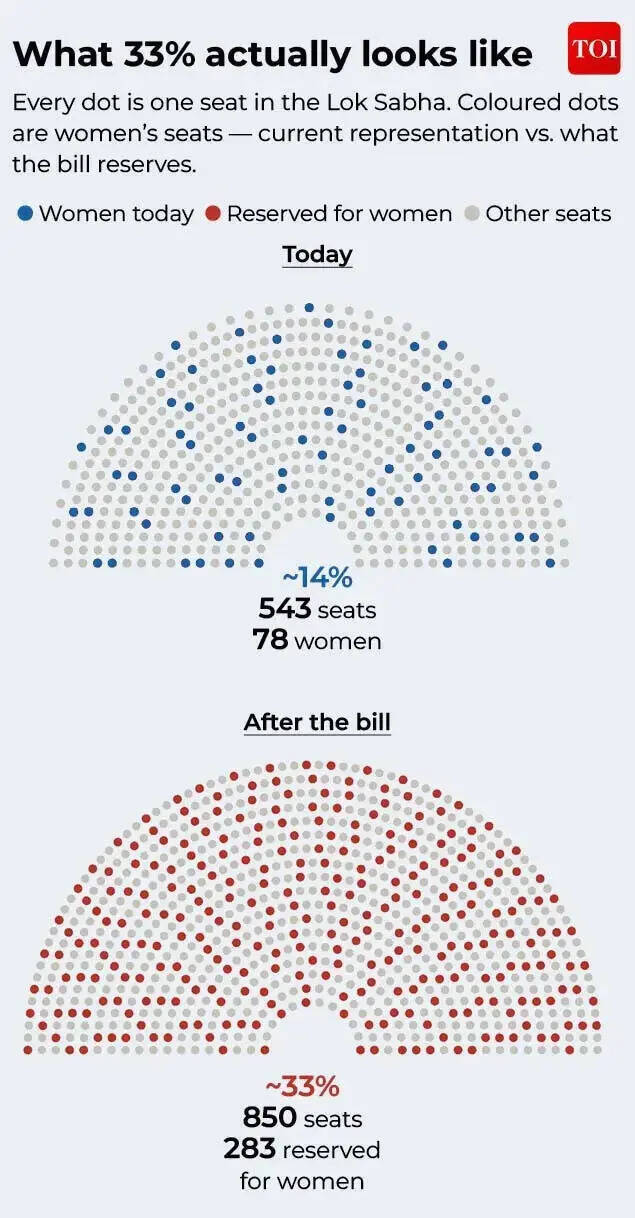
At the heart of the dispute is the structure of the bill itself. This is not a stand-alone women’s reservation measure but part of a larger plan related to delimitation.The proposed amendment seeks to increase the number of seats in the Lok Sabha from 543 to a maximum of 850. The 33 per cent reservation for women is related to the expanded House and will be implemented after a new delimitation exercise based on the latest population data.This is the bottom line for the opposition.Parties such as the Congress, DMK and Trinamool Congress believe that population-based delimitation will have a disproportionate impact on southern states, which have seen slower population growth compared to the Hindi heartland. They accused the government of using women’s reservation as a cover for a politically sensitive reshuffle of parliamentary representation.By tying these two issues together, the government effectively forces people to make a binary choice. Supporting the bill means accepting the demarcation framework; opposing it risks being labeled anti-women.
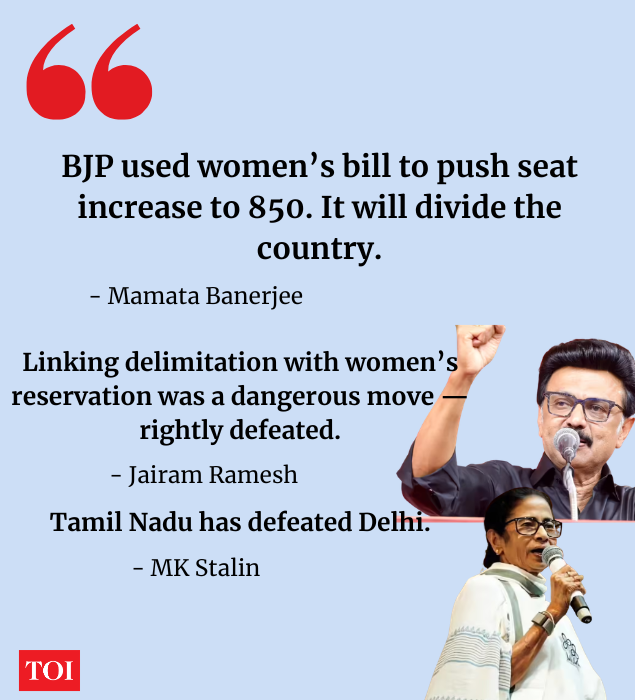
Leader of Opposition in Lok Sabha Rahul Gandhi In X’s post, he wrote: “The amendment bill failed. They used unconstitutional tricks to destroy the Constitution in the name of women.” India has seen this. India has stopped it. “Rahul further said, “I want to tell the Prime Minister that if he wants reservation for women, he should bring the 2023 law and the entire opposition will support it. We make it clear that this is not a women’s bill but an attempt to change the electoral structure of India.”
show alliance math
The vote also provided a glimpse into the current state of the IPU. If nothing else, the vote will allow the BJP to test the strength of its own party and allies while also testing the waters of the opposition camp.While the BJP polled 240 votes in the Lok Sabha, the NDA secured 298 votes, indicating that its allies largely remain with the party. This suggests that, for now at least, the alliance is intact and responsive to the BJP’s legislative push.However, the government was unable to attract sufficient support from opposition parties or induce abstention, thus lowering the effective majority threshold.Regional parties such as the YSR Congress and the Biju Janata Dal are under close scrutiny.In this sense, voting serves as a litmus test—a test not just of strength but of influence.
Safety Net of 2023 Laws
Even as the 2026 Bill is set to fail, the government is taking action to ensure that the wider goal of women’s retention is not completely derailed.As an important procedural step, it re-gazetted the Women’s Reservation Act, 2023 during the debate. This early law provided for 33% reservation of seats in the Lok Sabha and state assemblies, but its implementation was tied to future census and delimitation exercises.By doing so, the government creates a reserve of power. Even if the new amendment ultimately fails, the retained legal framework will remain unchanged.However, the opposition sees this as a face-saving move, arguing that the government is aware of its lack of numbers and is trying to control the image of failure.
what does failure mean
Since the constitutional amendment failed, the government decided not to move relevant legislation, including the delimitation bill and the amendment regarding federal territories.For now, the implementation of women’s reservation rights remains tied to the 2023 law, which itself depends on a process that is yet to be completed. That makes the timeline uncertain, and the issue remains politically relevant.But beyond the legislative results, the political consequences are already being felt.The BJP is expected to aggressively use the vote in its campaign messaging to portray the opposition as blocking a key reform. For opposition parties, the challenge will be to explain their position without appearing opposed to women’s representation. They will have to focus on the “shortcomings” of the demarcation process.Ultimately, the big picture is not the fact that the bill failed. That’s why, despite this certainty, it was moved.By doing so, the BJP government appears to have shifted its focus from within Parliament to outside Parliament, where votes are ultimately won and lost.Now, it will be interesting to watch whether it ultimately helps the BJP in the upcoming Assembly elections and the 2029 Lok Sabha polls.Meanwhile, Prime Minister Modi is likely to touch on this in his address to the nation today.