A few years ago, a video went viral of an Indian man beating a young man and taunting him: “May may banayega tu (Can you make memes?)”. The answer to this existential question is yes, because everyone is making memes right now, from the White House, which has been serenading us with supercuts of the Mortal Kombat theme song and clips from popular Hollywood movies, to the Iranians, who have somehow upped their meme game so much that much of the world is cheering on the meme game from various Iranian social media outlets, which goes to show that Americans are used to failing at their own game. Memes are a concept first proposed by Richard Dawkins in The Selfish Gene (1976) to describe units of cultural transmission similar to genes, and have since become the lingua franca of the Internet.
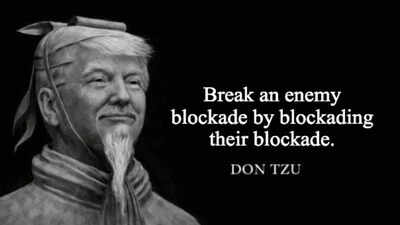
The meme that took the internet by storm and even broke through the Great Firewall of China is Don Tzu – it’s Donald Trump Sun Tzu – is filled with Trumpian aphorisms about “winning,” including gems like “Break the enemy’s blockade by blocking the enemy’s blockade” or “If you don’t know what you’re doing, your enemy doesn’t either” or “If you don’t have a goal, you can’t fail.”But let’s start from the beginning. During his first campaign for the presidency, Donald Trump told his audiences that they were going to “win so much” that they would be “tired of winning.” The world is close to tired. Today we are witnessing this victory in a way that the greatest strategic philosophers of yesteryear could not have imagined: Chanakya, Machiavelli and, obviously, Sun Tzu.Chanakya, the ruthless Indian adviser who masterminded the rise of the Mauryan Empire; Machiavelli, who wrote the Renaissance handbook on rule; and Sun Tzu, who laid out the blueprint for discipline in The Art of War, are all great in their own way, but none of them compare to Donald Trump, or to use his shelf-speaker nickname: Tang Zi.Jeffrey Epstein once wrote to Noam Chomsky that Trump had written three books, making him one of the few people on the planet who has written more books than he has read. Because Don didn’t need to study, he had internalized all their teachings. Sun Tzu writes that all wars are based on deception, but Tang Zi improves on this by eliminating the details of said deception. What critics call “gossip”—his tendency to slip into stream-of-consciousness thinking—is clearly the highest form of deception. Sun Tzu said: “Know yourself and your enemy, and you can fight a hundred battles without danger.” Tang Zi doesn’t know himself, how can his enemy know him?Sun Tzu believed that the highest excellence lies in breaking the enemy’s resistance without fighting, and Tang Zi did this by acting and speaking incoherently so that the enemy did not know what he was doing. Even he doesn’t know.Machiavelli, on the other hand, believed that it was safer to be “feared than loved,” and The Don argued that it was not too much to ask for either, as he first reshaped the Republican Party and then reshaped the new world order around those who feared him, loved him, and disliked him. A rules-based international order? There is only one rule: love Don with all your heart. Chanakya believed that power must be accumulated patiently. There is an apocryphal story that he saw a young mother scolding her son for eating from the center of the plate, where the food was hot, so he devised a technique of attacking the enemy’s weaker edges first and then working their way toward the center. Don knew this, which is why he built high walls on the border and captured his opponents directly from the capital.Chanakya believed that the enemy of an enemy was a friend, but Don Tzu believed that friend or enemy was just a state of being, depending on who had the better deal at hand. To borrow an old saying, it is dangerous to be his enemy, but even more dangerous to be his friend.All of this explains why the United States has achieved such great success in Iran. Is the strike effective? Has the fog of war lifted? Has the goal been achieved? Who cares.
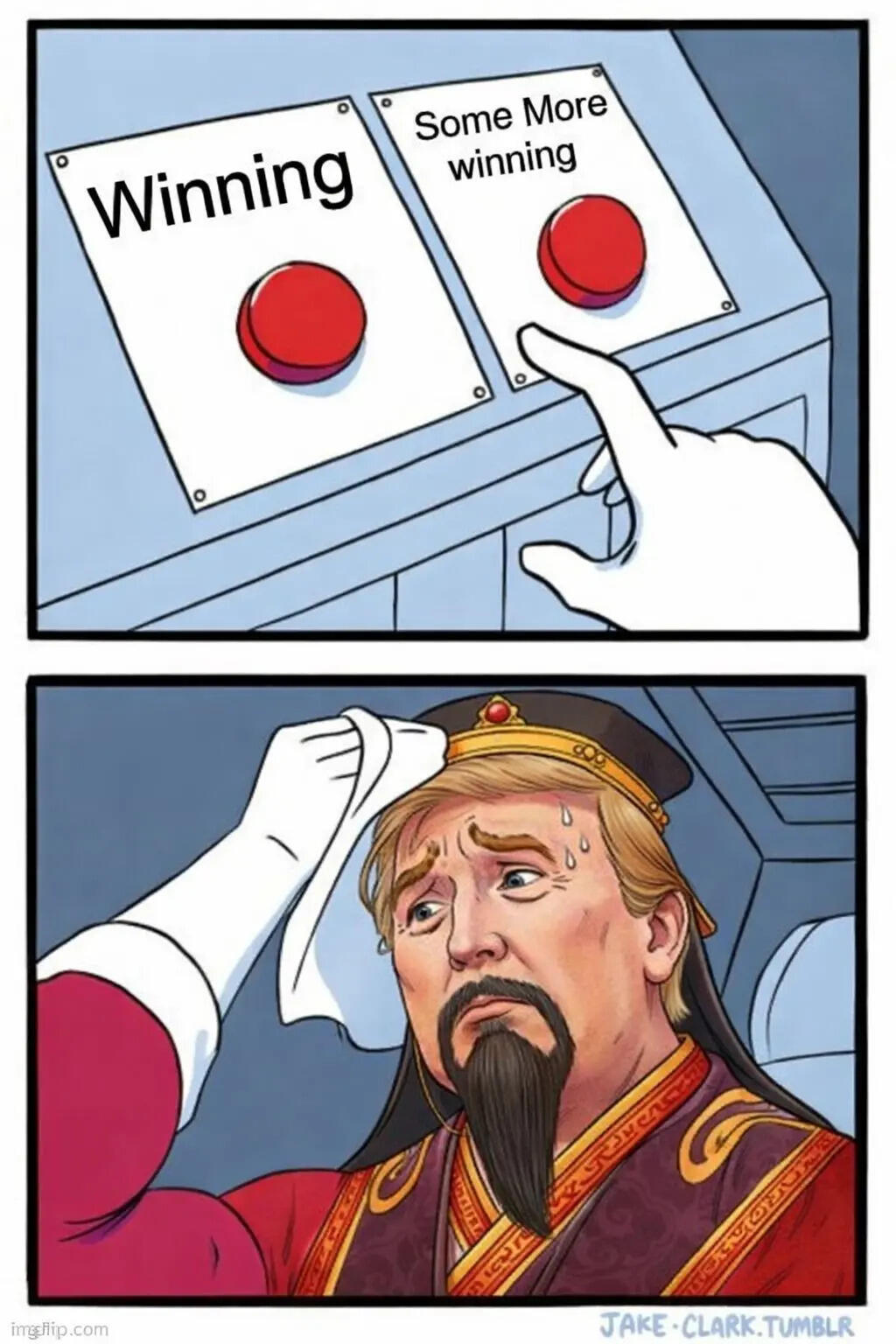
In the framework of “Tangzi”, this behavior is directed towards lower mortals. On the other hand, he declares victory, then declares a ceasefire, then declares he has won. Sun Tzu, Machiavelli, and Chanakya wanted to shape the battlefield, but Tang Zi understood that the reality was the group instinct caused by lack of attention, so everything he did was a complete and complete victory.Sun Tzu believed that knowledge precedes victory. Machiavelli believed that control maintains it. Chanakya thinks system can protect it.Tang Zi doesn’t think all of this. He probably doesn’t understand any of this, because it doesn’t matter. Because he understood better than any ancient strategist the true nature of perceived reality and all creation, which is that nothing matters and nothing is real.In The Matrix, when Neo goes to meet the Oracle during his first semester, he meets another young man, a potential young man who explains to him the true nature of the universe. After showing Neo that he can bend a spoon, Neo tells him to realize the truth: it’s not the spoon that bends, but you. Tang Zi has realized the true nature, but still wants someone to show up with a spoon: preferably a lot of gold spoons.
Edmund Hillary once said, One man cannot conquer a mountain; At best, one can hope to conquer oneself. Tangzi has moved beyond this, realizing that one can’t even conquer oneself, so why bother? As for winning, if you truly believe in your mind that you are winning, and every neuron firing is telling you that you are winning, then how else can you fail? But the world may be a little tired of winning, but that’s the world’s problem, not Tangzi’s problem.