
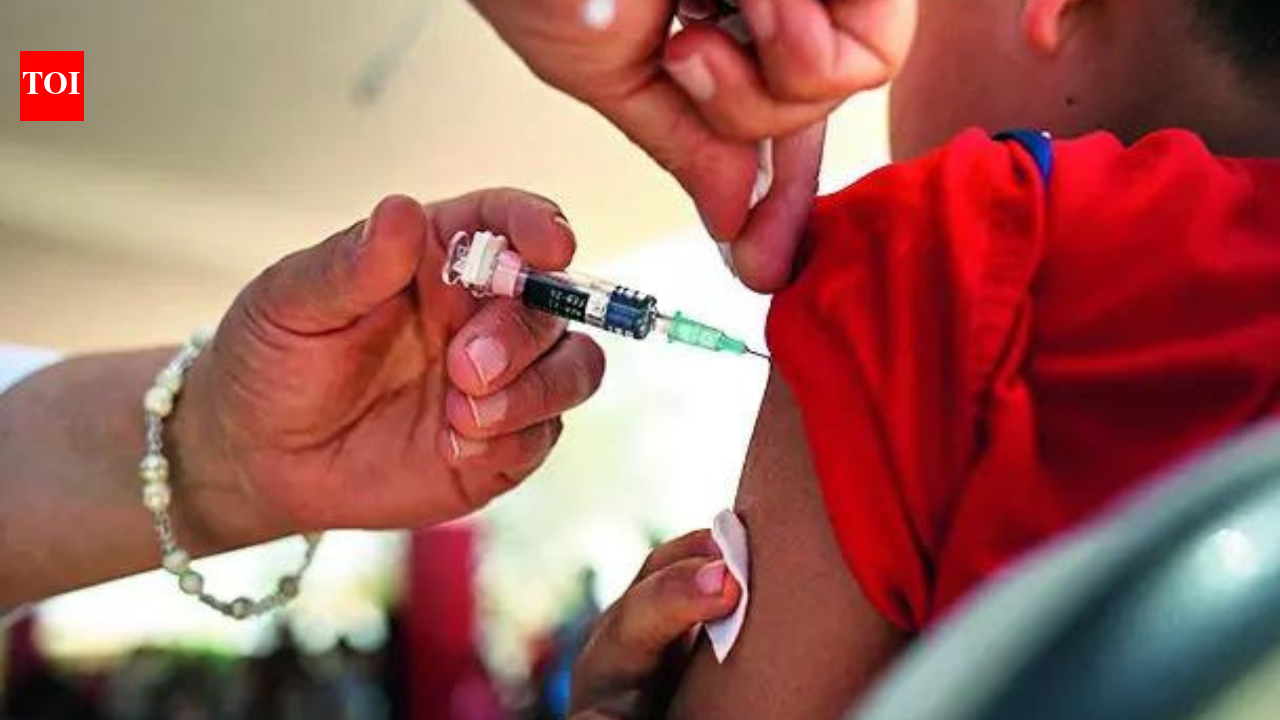
NEW DELHI: Although India allocates hundreds of millions of rupees for childhood vaccination every year, RTI data shows that a large chunk of the funds remains unspent, raising questions about the performance of the National Immunization Programme, one of the country’s largest public health programmes. Allocation for the scheme, which provides free vaccines to protect children from diseases including polio, measles and hepatitis B, has been increased to over Rs 3,400 crore in 2025-26, but spending has lagged behind. In 2023-24, the sanctioned expenditure of Rs 3,232 crore was around Rs 2,250 crore, while in 2024-25, the sanctioned expenditure of Rs 3,186 crore fell to around Rs 1,971 crore. In the financial year 2025-26, only about Rs 1,060 crore was spent out of the sanctioned Rs 3,434 crore (data is as of December and marked as provisional). The data is based on financial monitoring reports submitted by states and union territories. Despite this, the program continues to operate on a large scale. Government data shows that between 230 million and 25 million children will be vaccinated every year between 2021-22 and 2024-25. The data showed that comprehensive immunization coverage improved from 88.2% in 2021-22 to 98.1% in 2024-25, although there was a slight decline in 2023-24. RTI activist Amit Gupta said the scheme was crucial for child protection and required efficient, transparent use of funds and strict accountability. He also urged the government to expand coverage to include vaccines for influenza, typhoid and hepatitis, saying these vaccines were now essential for comprehensive child protection. However, the RTI response also pointed out gaps in the data system. Vaccination data broken down by sex was not provided and was instead forwarded to another department, indicating incomplete record-keeping. The vaccines come from a network of public and private manufacturers, including Serum Institute of India, Bharat Biotech, Biological E and Indian Immunologicals.