
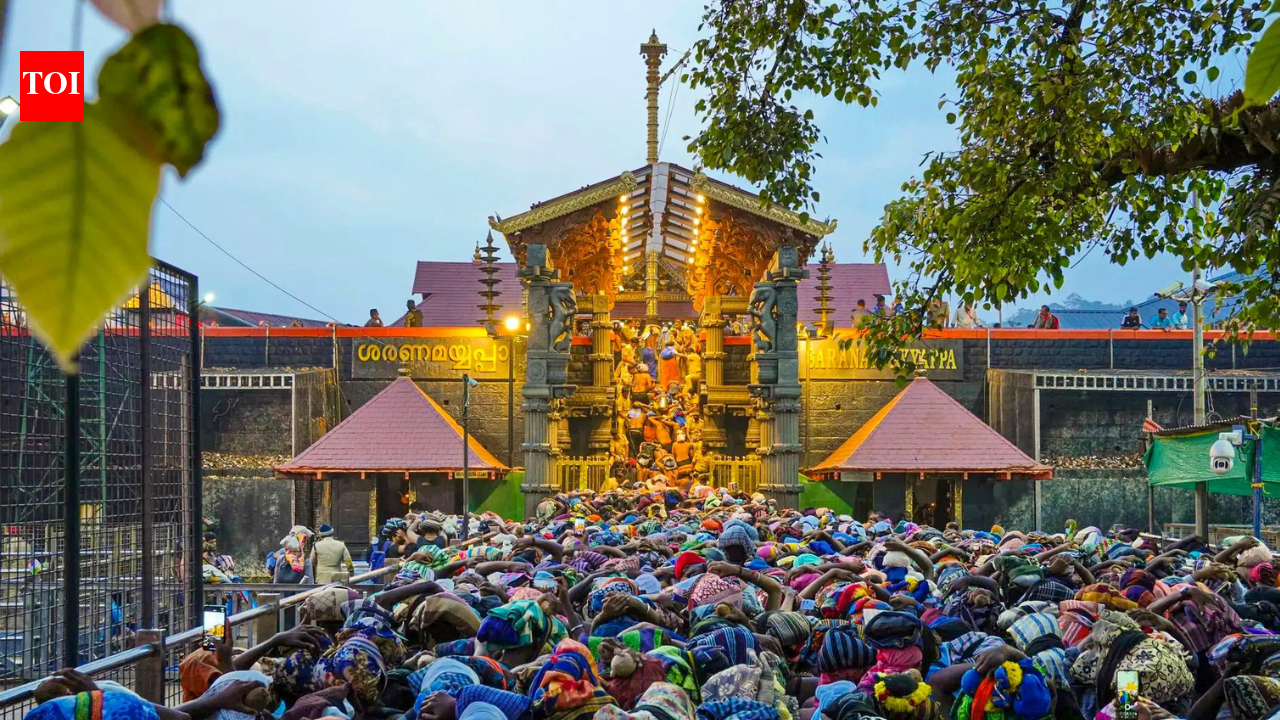
Sabarimala entry case: Supreme Court Justice Nagarathna says women cannot be treated as ‘untouchables’ for three days

New Delhi: Women cannot be treated as ‘untouchable’ for three consecutive days in a month and then cease to be so on the fourth day, Supreme Court Justice BV Nagarathna made the remarks while hearing a case including the Sabarimala issue on Tuesday.Solicitor General Tushar Mehta, representing the Centre, said he strongly disagreed with the 2018 Sabarimala judgment’s view that banning women between the ages of 10 and 50 from entering temples amounted to “untouchability” under Article 17 of the Constitution. “In the context of Sabarimala, I don’t know how to argue Section 17. As a woman, there can be no untouchability for three days in a month and no untouchability on the fourth day,” Justice Nagarathna said.This observation was in response to Mehta’s statement: “India does not have patriarchy or gender stereotypes as it is understood in the West.”In the Sabarimala case, Justice DY Chandrachud held that barring women from entering the Sabarimala temple in Kerala, whether because of age or menstrual status, amounted to “untouchability”, placed them in a “subordinate” position, reinforced “patriarchy” and undermined their dignity.Mehta said the ban on women from entering the Sabarimala temple has nothing to do with menstruation and is imposed only on certain age groups.“Let us be clear. Sabarimala is only about a certain age group. There should be no confusion. Lord Ayyappa temples across the country and across the world are open to women of all ages. Only one temple has such restriction. This is a special case,” he said.The nine-judge bench was hearing petitions alleging discrimination against women at religious places like the Sabarimala temple in Kerala and examining the extent and limits of religious freedom for different faiths. The Constitution bench included Chief Justice Surya Kant and Justices BV Nagarathna, MM Sundresh, Ahsanuddin Amanullah, Aravind Kumar, Augustine George Masih, Prasanna B Varale, R Mahadevan and Joymalya Bagchi.


