
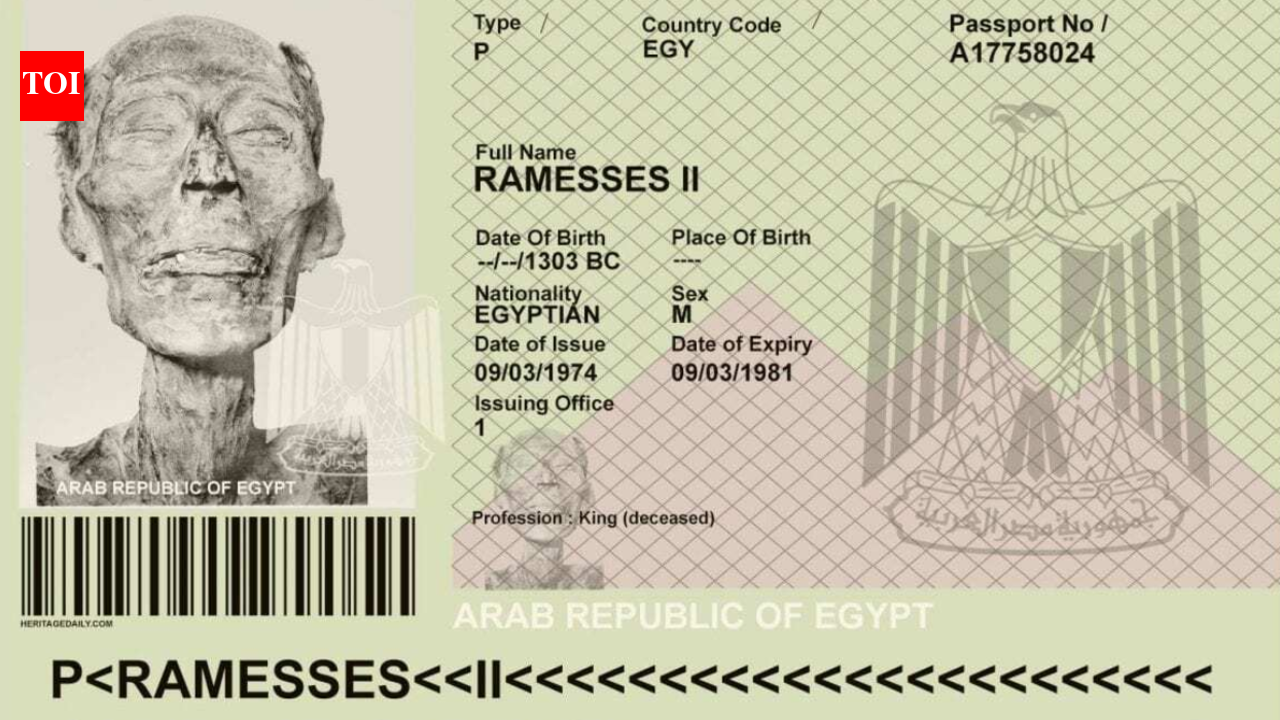
A widely shared post on social media purports to show Ramses II’s passport, which was allegedly issued more than 3,000 years after his death so that his mummy could be flown to France in 1974.The story spread in a way that was both fascinating and disbelieving, with an alleged passport image stating his date of birth as 1303 BC and his occupation as “King (Deceased)”. But while some of the claims are rooted in reality, the images themselves, and some of the surrounding assumptions, tell a more complex story.
Viral claims and reasons for concern
The post, widely shared on platforms such as Instagram, read: “In 1974, Ramesses II was sent to Paris for preservation and conservation. But because French law requires everyone, living or dead, to fly with a valid passport, Egypt was forced to issue the pharaoh a passport 3,000 years after his death.”The statement was accompanied by a picture of the pharaoh’s passport, a modern-looking document similar in style to Egypt’s official travel brochure. It features a portrait that resembles the mummified face of Ramses II, with typographical details that enhance the sense of authenticity: his date of birth is listed as “1303 BC,” the date of issue is “September 3, 1974,” and, most notably, his occupation is recorded as “King (deceased).” The layout mimics a standard passport format, complete with identification fields and formal typography, which is why the image is so widely taken at face value.A combination of bureaucratic absurdity and ancient history helped the claim spread quickly, but it blended fact with fiction.
What happened in 1974
The core of the story is true, but the full sequence of events is much more detailed than the virality suggests.In 1974, the mummy of Ramses II was flown from Cairo to Paris due to its deteriorating condition. It is reported New York Times, The series of events began when French physician Maurice Bécaille was researching the biblical Exodus story in the Cairo Museum and trying to determine the cause of the Pharaoh’s death.After obtaining permission to carefully examine the mummy, Bekaye discovered that “the remains under the bandages were in poor condition and were partially destroyed by mysterious growths.” He proposed that French scientists could assist with preservation, a suggestion that was initially resisted by Egyptian authorities, who were reluctant to allow such a historic figure to leave the country.The proposal was only advanced after it reached the highest political level. French President Valery Giscard d’Estaing raised the matter directly with Egyptian President Anwar Sadat during a state visit to Cairo last December and officially stated that France would assist in the restoration of the mummy.To accommodate modern travel requirements, Egypt issued Ramses II an official passport, a bureaucratic step that would become the most widely circulated part of the story. as pointed out national geographicthe document contains his image and lists his occupation as “King (deceased)”.
This image is not real but an artist’s rendering
While the passport itself exists, images circulating online do not show the actual document.Reverse image search traces widely shared image to an article published on an archeology website heritage daily March 25, 2020. The website clearly states in a disclaimer that the image is an “artist’s creation” and that the actual passport has not been made public.
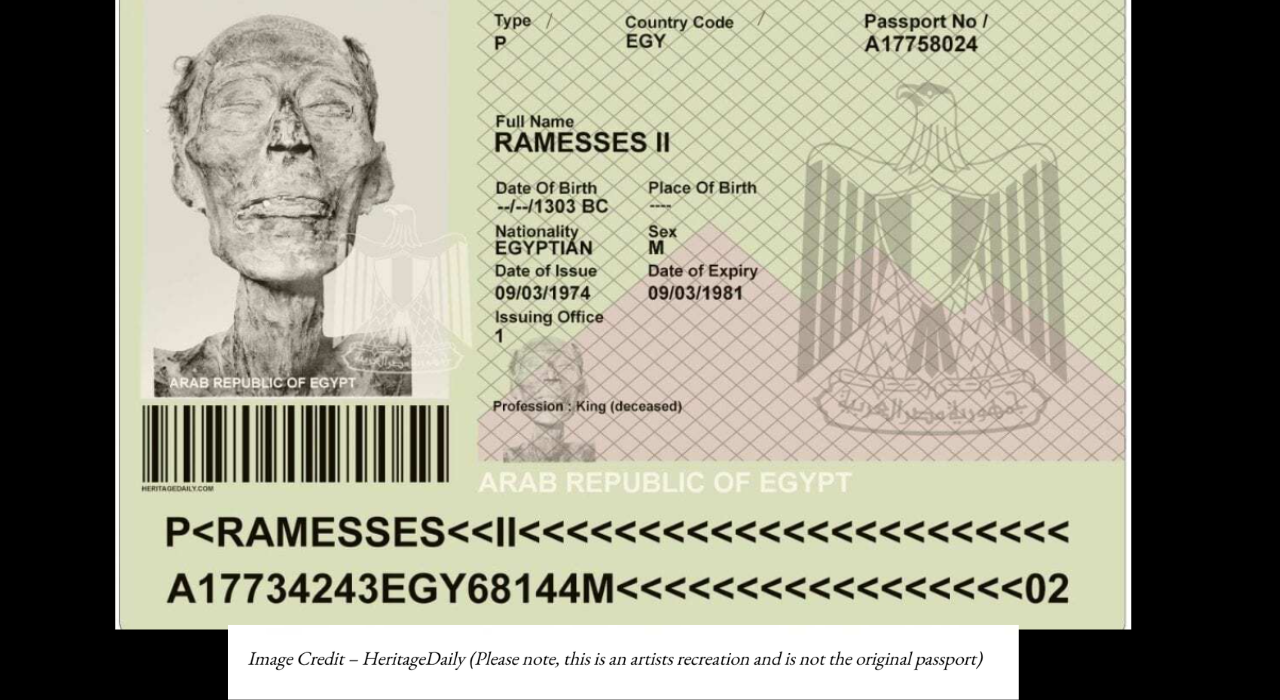
The image originally published on Heritage Daily included a disclaimer stating that it was an artist’s creation and not authentic.
In other words, the viral post combined real historical anecdotes with fabricated visuals to give the impression that there was no publicly released documentary evidence.
Who was Ramses II and why he continues to fascinate
Ramses II, commonly known as Ramses the Great, ruled for 67 years during Egypt’s Nineteenth Dynasty (c. 1279-1213 BC) and is widely considered to be one of the most powerful and famous pharaohs of the New Kingdom.He claimed a decisive victory over the Hittites at the Battle of Kadesh, although historians now believe it was more of a stalemate that ultimately led to the world’s earliest known peace treaty in 1258 BC.His legacy is immense. He had more than 200 wives and concubines, fathered dozens of children, and built monuments across Egypt on an unprecedented scale. Later generations respectfully called him “Taizu”.Originally buried in the Valley of the Kings, his body was later moved by priests to prevent looting and was eventually rediscovered in 1881 along with dozens of other mummies in the royal storerooms at Deir el-Bahri. Today he is on display in the Egyptian Museum in Cairo.Although there is no conclusive evidence, Ramses II is also often associated with the pharaoh described in the biblical Book of Exodus, which states in the account of the Israelites’ departure from Egypt: “From Rameses the children of Israel set out.”