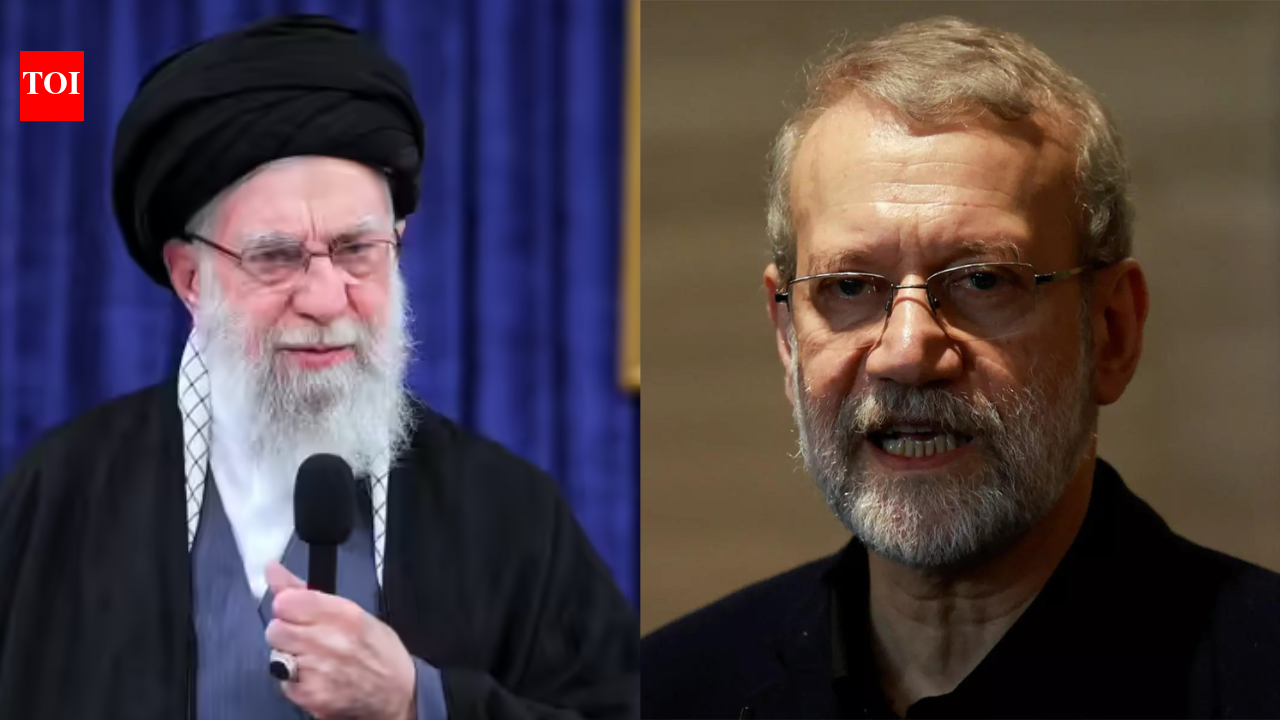
Supreme Leader Ayatollah Ali Khamenei, security chief Larijani and others—Iran’s main leaders were killed in the US-Israeli attack

The ongoing conflict between Iran, the United States and Israel has dealt a severe blow to Iran’s top leadership, with a series of high-profile killings targeting the country’s political and military command structures. Although the President of the United States Donald Trump Despite claims that the war actually resulted in “regime change,” Tehran has moved quickly to replace key figures and maintain continuity in its operations.At the top of the list was Ali Khamenei, Iran’s supreme leader since 1989, who was killed on February 28 when a high-level meeting in Tehran was attacked at the start of the war. His death marks the most significant blow to the Islamic Republic’s leadership in decades.Another significant loss was Ali Larijani, Iran’s national security chief and a long-time pillar of the system, who was killed in an Israeli attack near Tehran on March 17, 2026. His death is widely seen as the second biggest setback for Iran’s establishment after Khamenei.Overall, the conflicts between Iran, the United States, and Israel have escalated into multi-front confrontations. Although diplomatic efforts remain uncertain, attacks and missile strikes continue, and regional influence continues to expand. Iran has denied involvement in mediation efforts, including those proposed by Pakistan, while continuing to launch retaliatory attacks in the region. Amid the escalation, US President Donald Trump claimed Washington was in “serious discussions” with Iran’s “more rational” leadership but warned the US could take military action against critical oil and power infrastructure if talks failed and the Strait of Hormuz was not reopened. Iran denied the statement, saying there were “no direct talks.” The United States and Israel continue to put pressure on Iranian targets, while global energy markets remain volatile amid concerns about disruption in the Strait of Hormuz.Key Iranian figures killed in the conflict:
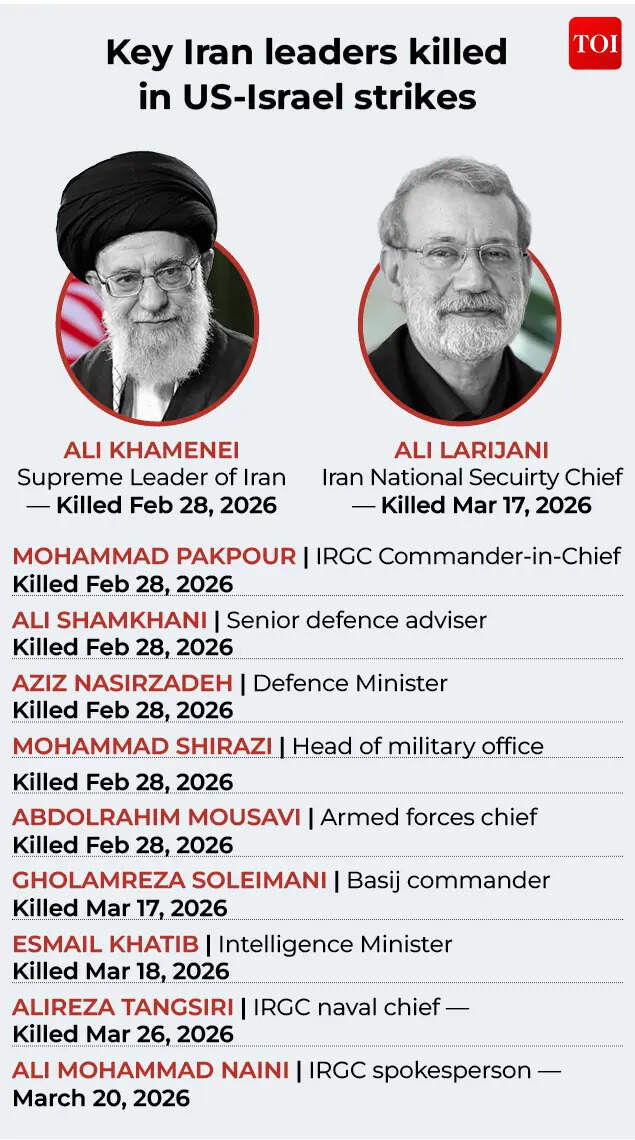
- Ali Khamenei – Supreme Leader
Iran’s most powerful figure since 1989, was killed on February 28 when a high-level meeting in Tehran was attacked at the start of the war. The attack also reportedly killed close family members. His son Mojtaba has since taken over but has yet to make a public appearance.
- Ali Larijani — Director of National Security
A long-time establishment power broker was killed in an Israeli attack near Tehran on March 17, along with his family. His death is seen as one of the biggest institutional losses since Khamenei.
- Mohammad Pakpour – Commander-in-Chief of the Islamic Revolutionary Guard Corps
Former Ground Forces Commander, who took over the Guards in 2025; he was killed on February 28, the first day of the war, and was later replaced by Ahmed Vahidi.
- Alireza Tangsiri — Chief of Naval Staff, IRGC
A senior commander and key figure in Iran’s maritime strategy since 2018; he died on March 26 from injuries sustained in an Israeli attack that linked him to Hormuz-related operations.
- Ali Shamkhani — Senior Defense Advisor
A central figure in Iran’s security apparatus since the 1980s; previously survived an airstrike and was killed in an airstrike on February 28.
- Esmail Khatib – Minister of Intelligence
A cleric who had led Iran’s intelligence agency since 2021; he was killed in an attack in Tehran on March 18 and was widely seen as a key figure in domestic security operations.
- Aziz Nasirzadeh — Minister of Defense
Former Air Force commander and veteran of the Iran-Iraq war; killed on February 28 during a strike against senior leadership.
- Ghulamreza Soleimani – Basij Commander
Chief of Basij military forces, known for internal security roles; killed in an airstrike on March 17.
-
Ali Muhammad 9 – Spokesperson of the Islamic Revolutionary Guard Corps
He was killed in what Iran called a U.S.-Israeli attack on March 20, shortly after publicly asserting the capabilities of Iran’s missile program.
- Mohammad Shiraz—Director of the Military Office
Responsible for coordination among Iran’s armed forces under the Office of the Supreme Leader; killed on February 28.
- Abdulrahim Mousavi – Commander-in-Chief of the Armed Forces
Recently appointed to oversee coordination between the army and the Islamic Revolutionary Guard Corps; killed on February 28 during the first wave of strikes.