
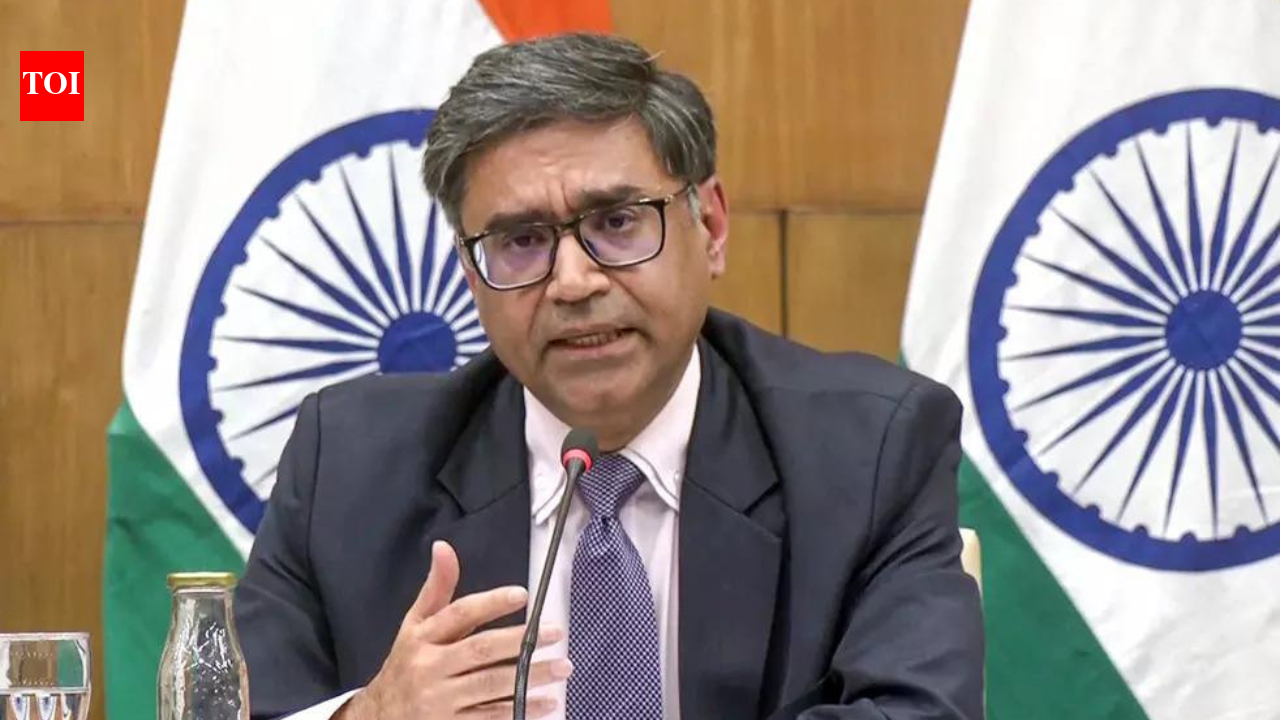
NEW DELHI: India’s oil procurement strategy will be guided by national interest and will not be dependent on the needs of any single country, the government said on Monday, while stressing that actual procurement is done by oil companies and decisions depend on market conditions, supply conditions, pricing and risk assessment. Foreign Minister Vikram Misri’s remarks came three days after US President Donald Trump issued an executive order to cancel the 25% punitive tariff on India, saying that India committed to stopping direct or indirect purchases of Russian oil. Misri said that with India’s stance on already declining Russian oil imports hanging in the balance, oil companies, both public and private, would continue to make business choices based on the considerations he outlined, a complex matrix of issues including important financial and logistical aspects.
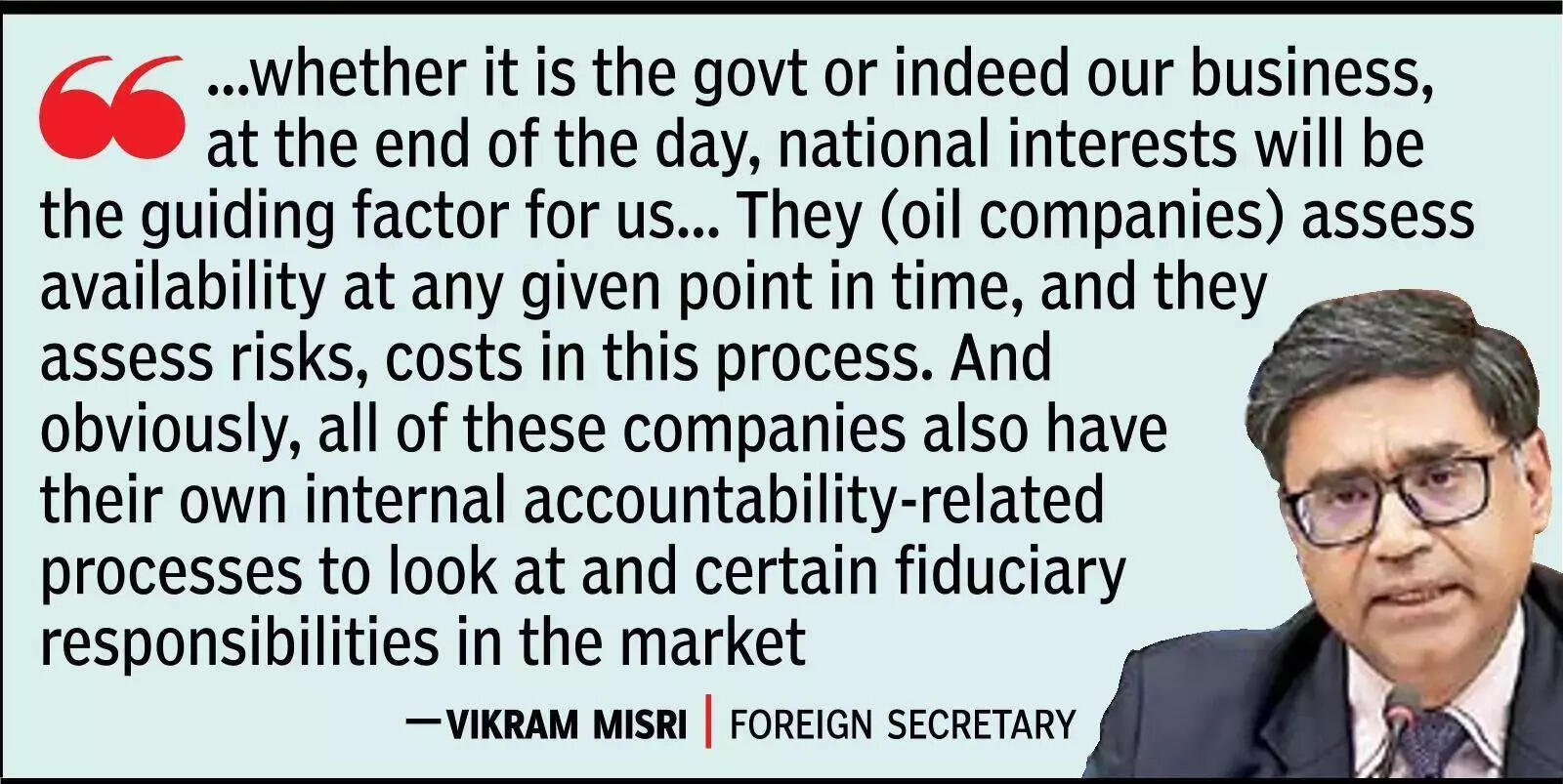
His response came after Commerce and Industry Minister Piyush Goyal repeatedly said that only the Ministry of External Affairs could comment on whether India made any such commitments to the US when it came to the interim trade deal framework, and the opposition accused the government of dodging the issue.Misri says Indian companies assess oil supply situation, risks and costs“I can say firmly and confidently that ultimately, whether it’s the government or our businesses, national interest will be the guiding factor in our choices,” Misri said, responding to questions at a media briefing on Seychelles President Patrick Ermini’s visit.In December, India’s crude oil imports from Russia fell to a 10-month low of $2.7 billion, down 15% from December 2024, while Saudi Arabia (up 60% to $1.8 billion) and the United States (up 31% to $569 million) were the countries with the largest increases. However, Commerce Department data showed that Russia remained the largest source country, accounting for 31% of imports from April to December 2025, compared with just under 37.5% a year ago. During this period, the U.S. share jumped from 4.5% to 7.8%.“They (oil companies) assess availability at any given point in time and assess the risks and costs in that process. Obviously all these companies also have their own internal accountability-related processes and certain fiduciary responsibilities in the market,” Misri said. He added that the government’s top priority is to safeguard the interests of Indian consumers and ensure that they receive adequate energy at the right price through reliable and secure supply.Misri also said that India seeks to maintain multiple sources of supply and diversify supplies as appropriate to ensure stability. “I would say the more diversified we are in this area, the safer we are,” Misri said. Ensuring price stability and security of supply is a common interest for India and many other countries at a time when global uncertainty affects energy market stability.He pointed out that India is not only one of the largest energy consumers but also helps stabilize global energy markets. “This is one of the reasons we import energy from a variety of sources… The key drivers of our energy policy are adequate supply, fair pricing and reliability of supply. We import crude oil from dozens of countries. We are neither dependent on any single source nor do we intend to be dependent on any single source.”