
New Delhi: Supreme Court The deadline for review of claims and objections in the Special Intensive Revision (SIR) of West Bengal’s electoral roll was extended on Monday and a personal affidavit of the state’s police chief was sought over allegations that election officials faced threats, violence and obstruction during the elections. A bench comprising Chief Justice Surya Kant and Justices Joymalya Bagchi and NV Anjaria directed that the examination of documents and objections should be extended by at least a week beyond February 14, the scheduled date for publication of the final electoral roll, citing the time required to examine the claims.
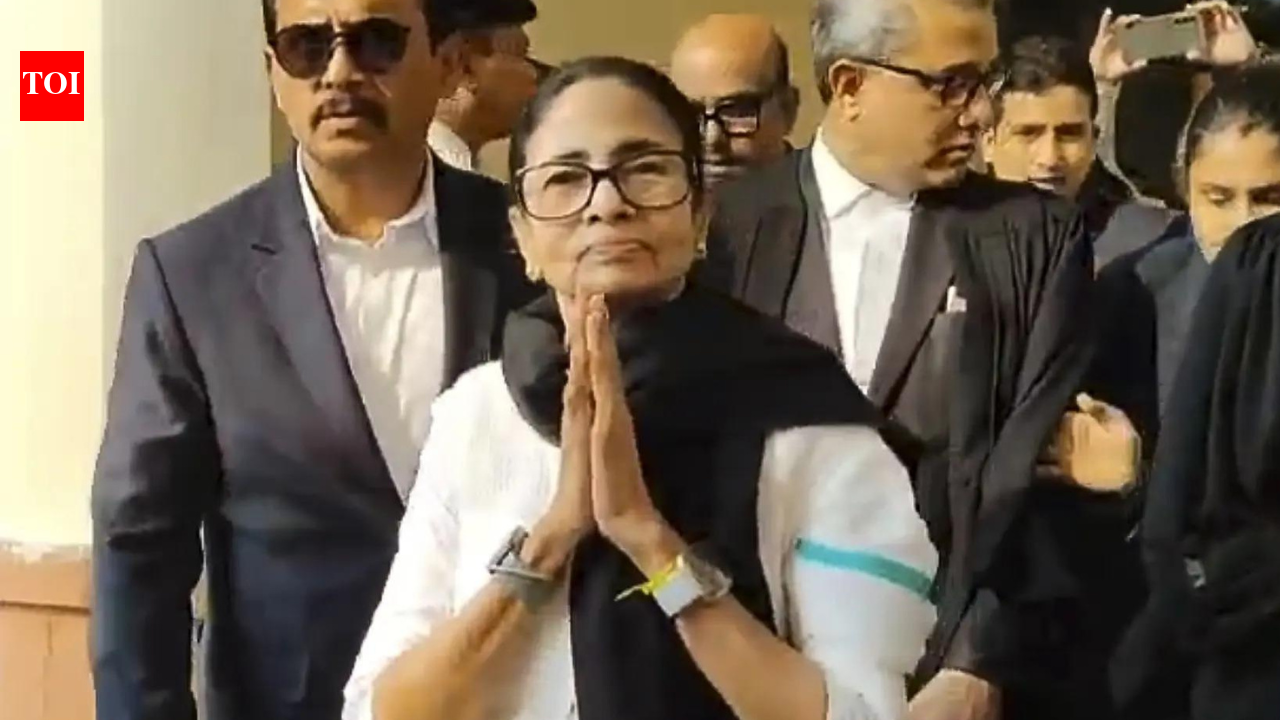
The court also made it clear that it would not allow any interference in the SIR proceedings. “We will not allow anyone to create any hurdles in the SIR exercise. States must be aware of this,” the CJI said while hearing a batch of petitions, including one filed by the West Bengal chief minister. Mamata Banerjee.
Final authority belongs to ERO, micro observers only provide assistance
Clarifying the key points of contention, the bench reiterated that the final decision on claims and objections can only be taken by the Electoral Registration Officer (ERO), while micro-observers appointed by the Electoral Commission (EC) only play a facilitative role.“The duty that has been assigned to the micro observer is only to assist the DEO/ERO. In other words, the final decision will be taken by the ERO only,” the court said. The judge also clarified that ERO is obliged to consider objections under the statutory scheme and can independently verify the authenticity of documents, regardless of whether the objector attends the personal hearing.
Country deploys Group B personnel, ECI decides suitability
To streamline the procedure, the court directed the West Bengal government to ensure that all 8,550 Group B officers whose lists were submitted during the hearing report to the district collector or ERO by Tuesday evening.From this pool, the ECI can shortlist officers equivalent to the number of micro-observers already employed after assessing their biodata and work experience and provide them with brief training. How they are deployed and how they work will be decided by a voting panel, which will also be free to replace officials found not performing their duties, the court said.
Notification to DGP regarding violence, burning notice
Taking into account the ECI’s affidavit accusing miscreants of intimidation, hostility and burning of notices, the bench issued notice to the West Bengal DGP directing him to file a personal affidavit.The court took note of the ECI’s submission that despite multiple complaints, no FIR has been registered in connection with the alleged violence and mass burning of Form 7 objections. It also recalled the January 19 order directing the DGP to ensure that law and order is maintained during the SIR exercise.“A message must be sent that the Constitution of India applies to all states,” said Solicitor General Tushar Mehta, appearing for the Centre.
‘No mass exclusion’, court says during Banerjee hearing
During the hearing, senior advocate Shyam Divan, appearing for Banerjee, expressed concern over the possibility of appointment of micro-observers from outside the state and “massive exclusion” of eligible voters.“We don’t want any mass exclusion,” Dewan told the judges.The court noted these concerns while clarifying that the statutory authority to determine claims rests solely with the ERO.The bench was hearing a slew of petitions filed by Trinamool Congress leaders and others challenging the conduct of SIR in West Bengal, as well as petitions by Sanatani Sangsad, poet Joy Goswami and others. While Banerjee’s plea questions the ECI’s classification of voters into the “logical difference” category, Sanatani Sansad has sought protection of election officials and deployment of state police under ECI control.Last week, Banerjee personally appeared before the Supreme Court to claim that West Bengal was being targeted ahead of the assembly elections and expressed concern over a slight mismatch in names in Bengali and local dialect translations.(With inputs from PTI and Live Law)