
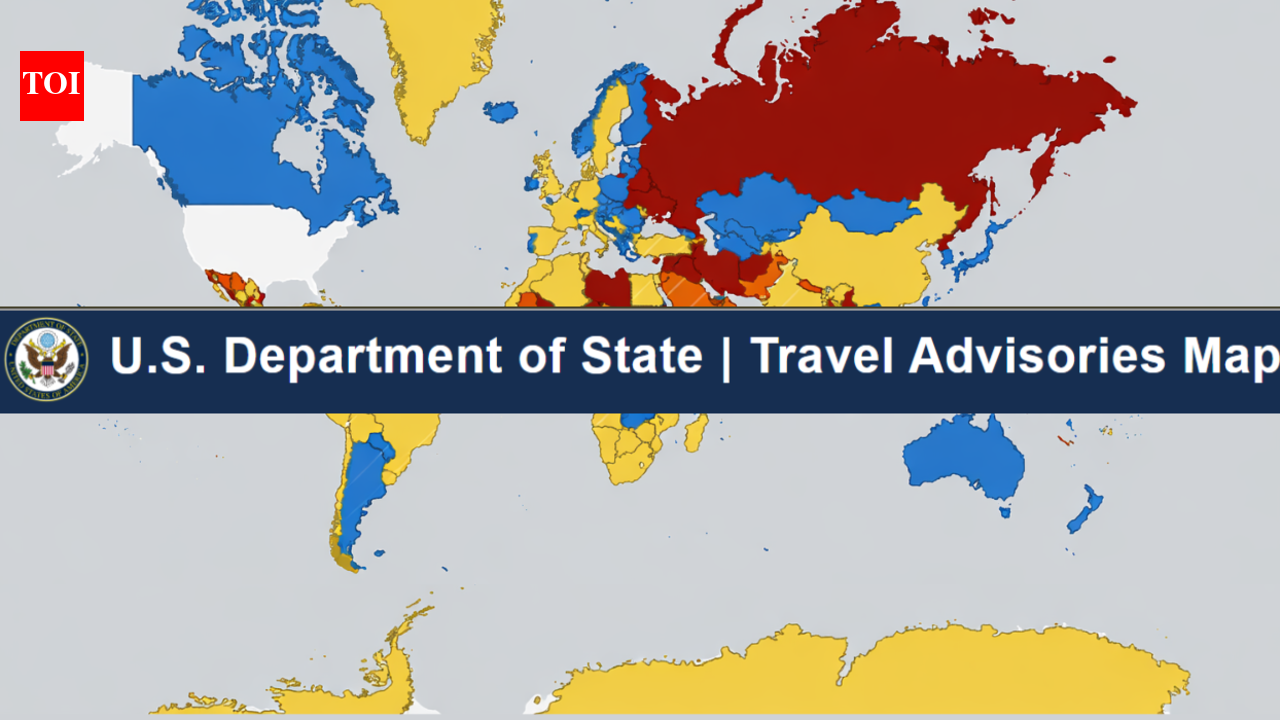
As the conflict involving Iran continues to reshape global security, the U.S. The U.S. State Department has issued its latest travel advisory, warning that U.S. citizens overseas may face risks of arbitrary detention, violence and kidnapping. Updated guidance reflected in the sector’s global consultation Interactive world mapAs geopolitical tensions and recent military developments continue to impact travel safety, some countries are at the highest risk level, while alert levels have been raised in parts of the Middle East and beyond.
How the four-level consultation system works
The U.S. State Department classifies each country into a four-tier system designed to indicate the level of risk faced by U.S. travelers:
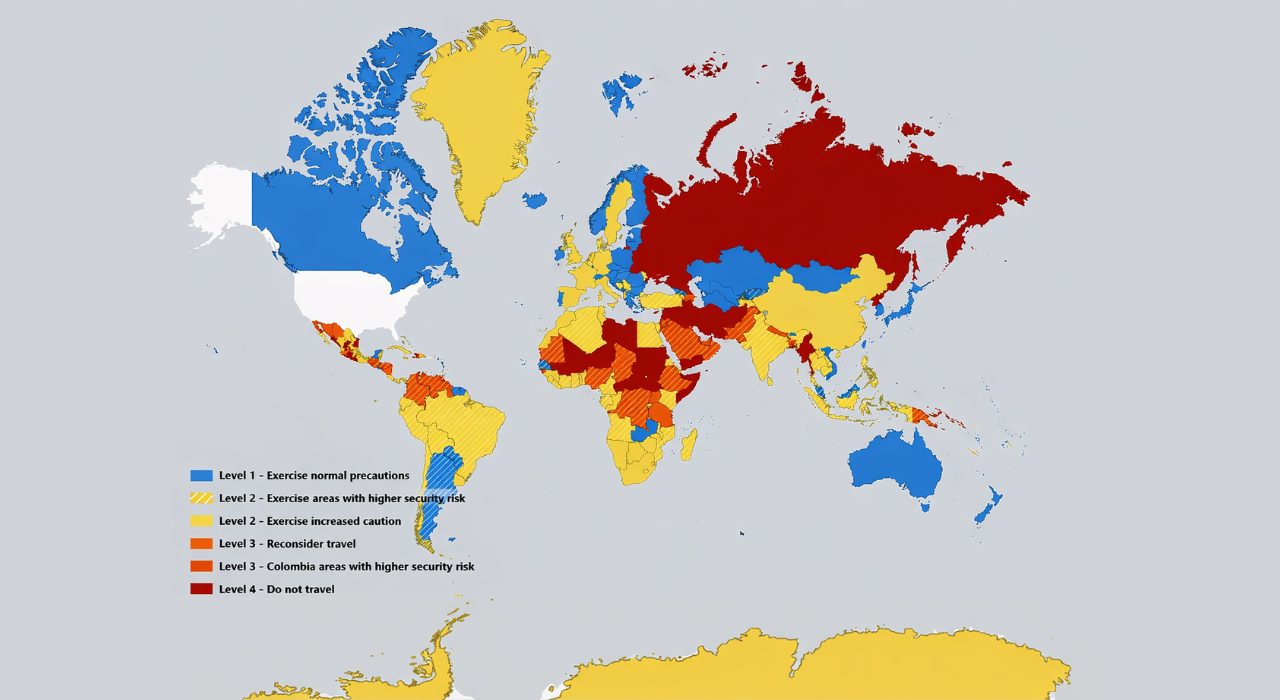
U.S. State Department map shows the world’s most dangerous countries. (State Council)
Level 1—Take normal precautions This is the lowest level of consultation. While there are some risks associated with any international travel, such countries are considered relatively stable, although conditions may still differ from those in the United States. Level 2—More cautious Passengers are advised to remain vigilant and increase safety risks. These risks vary from country to country and are detailed in the individual advice. Level 3 – Rethink Travel This level indicates a serious risk. Americans are being urged to reconsider necessary travel due to safety concerns. Level 4 – Do not travel The highest advisory level issued when a life-threatening risk exists. The U.S. government may have limited or no ability to assist citizens in emergencies, and travelers are advised not to travel or depart if already present.The full list and interactive map published by the U.S. Department of State can be viewed online. (here)
Iran and conflict zones most at risk
Iran has been designated a Level 4: Do Not Travel destination, with the U.S. State Department citing risks of “terrorism, riots, kidnapping, arbitrary arrests of U.S. citizens, and wrongful detention.” The designation comes amid ongoing hostilities by the United States and its allies, including attacks on Iranian military and strategic locations since February.The Level 4 category also includes several countries affected by conflict or instability, including Afghanistan, Haiti, Iraq, Libya, Russia, Somalia, Sudan, Ukraine and Yemen. In some of these locations, the United States has limited or no consular presence, meaning providing assistance to citizens may be difficult. The U.S. State Department also noted that Russia has a history of wrongfully detaining U.S. citizens.
Warnings issued across Middle East as tensions spread
In the latest update, the advisory level for some countries in the Gulf region has been raised from level 2 to level 3. These include Saudi Arabia, Oman, Kuwait and Bahrain. The Level 3 designation means Americans are advised to reconsider traveling due to heightened security risks, reflecting concerns about potential spillover effects from the Iran conflict and regional instability.Other countries included in Tier 3 include Colombia, Honduras, Israel, Nicaragua, Qatar, the United Arab Emirates and Venezuela.
Broader global caution and country-specific risks
Countries in Level 2: More cautious countries include Cuba, the Dominican Republic, France, Greenland, Italy, Mexico and the United Kingdom. In Mexico, this recommendation varies by region. States such as Sinaloa and Colima are classified as level 4 due to cartel violence, while Jalisco and Baja California are classified as level 3. The State Department said the recommendations are intended to give Americans a clearer understanding of the risks when planning travel and to help them take precautions abroad.
Global alerts and immediate threats
In addition to updating the map, the State Department also released Global Security Alert Americans are warned to remain vigilant because of potential threats from groups linked to Iran. The warning follows remarks broadcast on Iranian state television by Brigadier General Abolfazl Shekarchi, who said: “From now on, based on the information we have about you, even parks, recreation areas and tourist destinations anywhere in the world are no longer safe for you.” The statement underscored concerns that public spaces, including tourist attractions, could be targeted if tensions escalate.
Traveler’s Guide
The U.S. State Department recommends that Americans traveling abroad take its Smart Traveler Enrollment Program (STEP)a free service that provides updates and alerts from U.S. embassies and consulates. While advice varies from country to country, officials stress that the situation can change quickly, especially in conflict-affected areas, and travelers should pay close attention to the latest developments before and during international travel.