
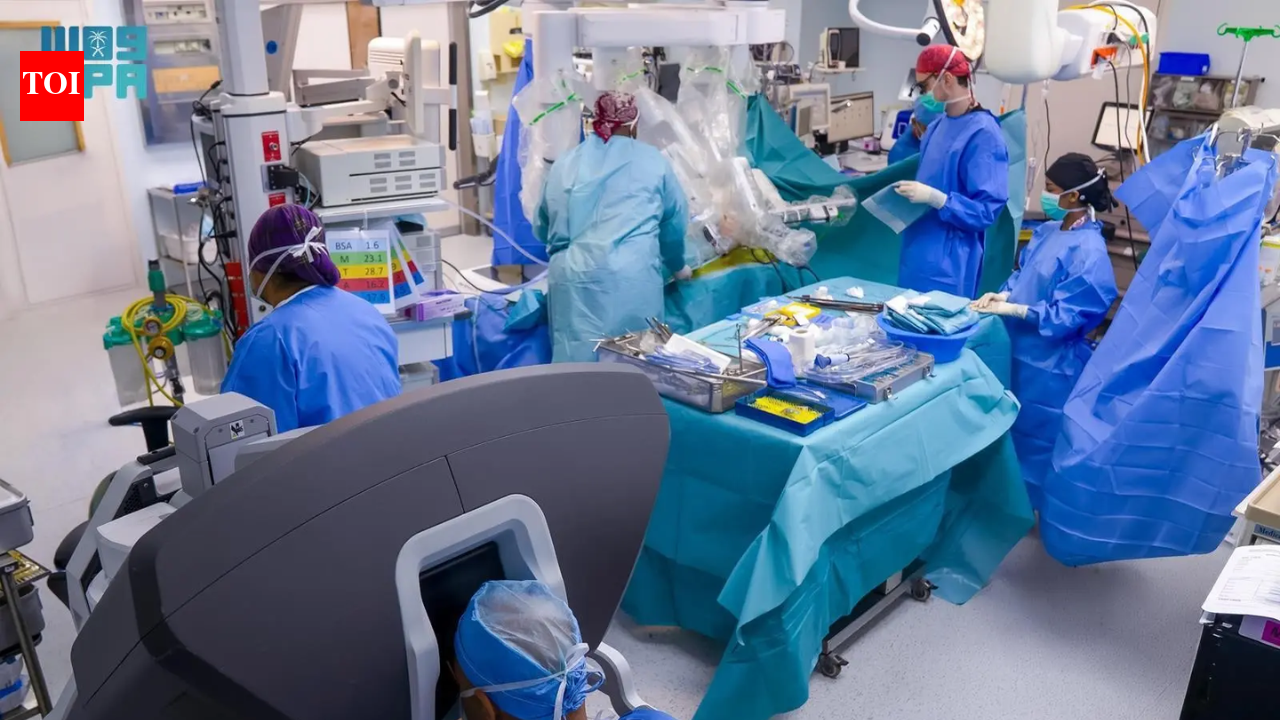
Doctors in Saudi Arabia performed complex robotic surgery on a two-year-old child diagnosed with Hirschsprung disease, a rare disease that affects the function of the intestines.The child, who weighed about 10 kilograms, was being treated at the King Faisal Specialist Hospital and Research Center (KFSH) in Jeddah. Hirschsprung disease occurs when a part of the colon does not have the nerve cells needed to carry waste products into the body. This can lead to severe constipation and, in severe cases, intestinal blockage.To treat this condition, doctors perform a procedure called a Soafra tunnel. Simply put, this involves removing the part of the colon that is not working properly and connecting the healthy part so that the intestines can work properly again.Performing this surgery on a young child is not easy. There is very little space inside a child’s pelvis, and important nerves, muscles, and blood vessels are located near the surgical area. Any mistakes can affect the functioning of your intestines in the long run.This is where robotic assistance plays a key role. Robotic systems provide surgeons with a clearer view, allowing them to perform surgeries with greater control and precision. This makes it easier to handle delicate tissue and perform surgery safely.The case highlights how advanced technology can be used to manage difficult medical conditions, especially in children who are more surgically sensitive.KFSH said the procedure reflects its ongoing focus on using modern medical technology to improve treatment outcomes.The hospital has also received several global recognitions. Among the top 250 academic medical centers in 2026, it ranks No. 1 in the Middle East and North Africa and No. 12 globally. It has also been named the most valuable healthcare brand in Saudi Arabia and the wider region in 2025 by Brand Finance.In addition, KFSH has been named the “World’s Best Hospitals 2025”, “The World’s Best Smart Hospitals 2026” and “The World’s Best Specialty Hospitals 2026” by Newsweek.