
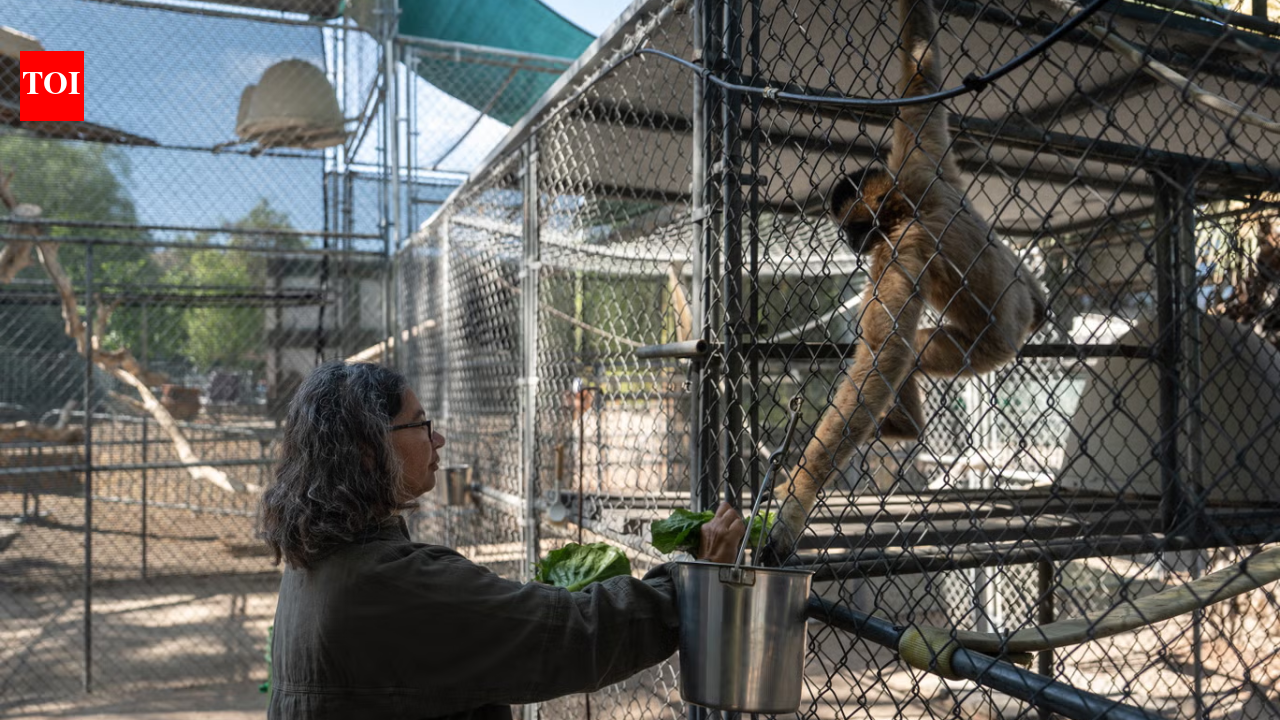
Every morning, as dawn breaks over the dry hills north of Los Angeles, a chorus of sirens, deep hoots and high-pitched calls echoes across the Santa Clarita Valley. The sounds come from the Gibbon Conservation Center, a sanctuary that has spent half a century protecting some of the world’s most endangered primates. Founded in 1976, the sanctuary now houses around 40 gibbons belonging to five species, according to The Independent. Known for their complex vocal duets, these small apes are native to the tropical rainforests of Southeast Asia. Their numbers in the wild have fallen sharply because of deforestation, habitat loss and the illegal pet trade. For some of the species at the centre, fewer than 2,000 animals remain in the wild. The sanctuary was founded by the late Alan Mootnick, a self-taught primatologist who ran a home painting and remodelling business. Mootnick got his first gibbon, Spanky, in 1976 after responding to a newspaper advert. Although he had no formal degree in biology, he bought the 10-acre property in 1980 using money from his business and gradually turned it into a major centre for gibbon research and conservation.Over the years, Mootnick published scientific papers, welcomed researchers from around the world and helped experts identify different gibbon species. After Mootnick died in 2011 from complications following surgery, the centre came under the leadership of director Gabi Skollar. Skollar moved from Hungary to the US in 2005 to study under Mootnick. She had planned to leave after finishing her studies but decided to stay and run the facility. “We have to keep going and take care of this place,” she said. Skollar now lives at the centre and manages its daily work with a team of animal care staff.
Caring for endangered gibbons
The sanctuary works to maintain genetic diversity by carefully managing breeding programmes and exchanging animals with accredited zoos and other conservation facilities. One of its biggest achievements was becoming the first facility to successfully breed the endangered Javan gibbon in captivity. The species is native to Java, Indonesia. The centre is also preparing to send a pair of northern white-cheeked gibbons to the Pittsburgh Zoo as part of wider conservation efforts. Daily care requires carefully planned diets and, when needed, hand-rearing young animals. Caretaker Jodi Kleier prepares meals that include washed lettuce, steamed sweet potatoes and chopped bananas. Kleier also hand-reared a young gibbon named Rocky after his mother abandoned him at birth. Such cases can sometimes happen with first-time primate mothers. The gibbons also have their own personalities and vocal habits. A young northern white-cheeked gibbon named Pepper often starts the morning calls. A pileated gibbon named Violet joins in with her partner, Truman. Another resident, Pierre, has developed a particular dislike of male visitors and makes his feelings known through his calls.
Research and education
The centre is not only a home for endangered animals. It also serves as a place for non-invasive scientific research. Skollar is working towards a doctorate at the University of California, Los Angeles, studying gibbon vocalisation patterns. “There’s a lot of things that we can learn in a captive setting that can be shared with conservationists in the field and also with people working in sanctuaries rescuing gibbons,” Skollar said. The sanctuary also works with educational institutions, including The Teaching Zoo at Moorpark College. Every year, first-year college students visit the centre to learn about caring for exotic animals. Some later return to work at the sanctuary. Mara Rodriguez, a development coordinator at the Moorpark College zoo who first visited the centre in the 1990s, said the experience can change how people see the animals. “When I went out there for the first time in the 1990s, I didn’t know what a gibbon was,” Rodriguez said. “Now I’ve raised four gibbons in my career.” She said visitors “will leave with a lasting impression and begin to care about the species”.Animal care specialist Sophia Paden also stressed that gibbons are highly social animals and should never be kept as pets. “Gibbons are a lot like us humans; they actually live in family groups,” Paden said in an interview with local media. “No primate should ever be a pet. Their needs are too complicated, and they pose a danger to people.” The sanctuary offers limited public tours on weekends, while schools and community groups regularly request educational visits. Looking ahead, the centre hopes to raise more money to build larger enclosures for the animals and create a permanent education centre on its 10-acre property. After 50 years of work, its goal remains the same: protecting gibbons, studying them and helping more people understand why these endangered apes need to survive in the wild.