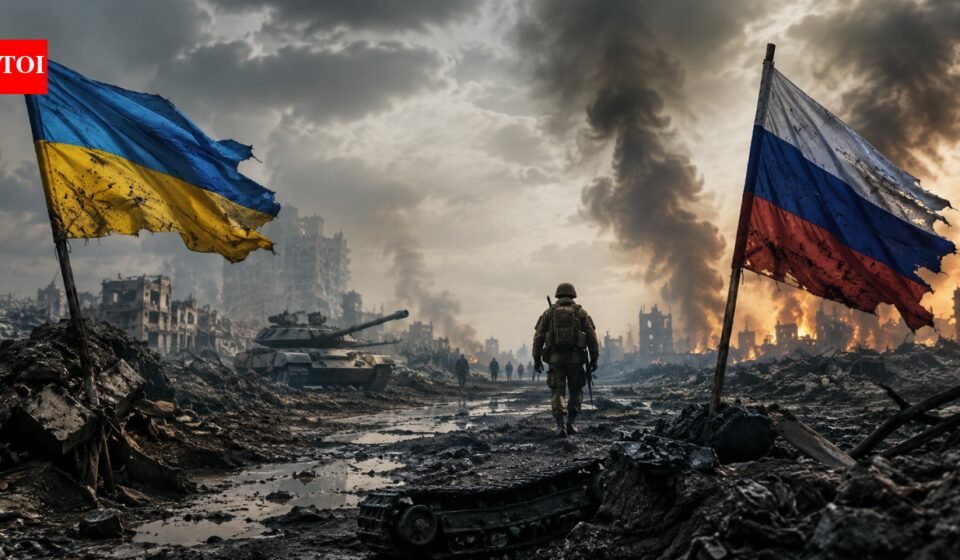

Russia’s war with Ukraine has entered uncharted territory. More than four years since Russian troops entered Ukraine in February 2022, the conflict has lasted longer than World War I, a global conflict that lasted from 1914 to 1918 and came to be known as the “World War.”According to the New York Times, the war has lasted 1,569 days, longer than the duration of World War I. The military campaign the Kremlin believed would bring Kiev to its knees within days has now turned into Europe’s longest and bloodiest conflict since World War II.In 2022, Moscow is expected to win quickly. Instead, the invasion has turned into a protracted and costly confrontation that has reshaped Europe’s security landscape and defied nearly all early predictions about its trajectory.Several attempts have been made so far to ease tensions between Moscow and Kiev. No one succeeded in bringing the war closer to a lasting peace.Commander in Chief of the United States Donald TrumpHe, who often casts himself as a dealmaker capable of resolving some of the world’s toughest conflicts, has also tried to play the role of mediator.However, it turns out that the Ukrainian issue is far more stubborn than expected.In one of the most high-profile diplomatic moments of the conflict, Trump rolls out the red carpet for Russia’s foreign minister Vladimir Putin Alaska hosted him on U.S. soil for the first time in a decade.Visuals include handshakes, bilateral meetings, joint appearances and committed engagements. But when the cameras are turned off, little changes on the battlefield.Putin is back in Moscow and the war machine continues to advance.Meanwhile, Zelensky continues to travel between capitals seeking support. Ukrainian leaders, who rely on Western military and financial aid to sustain Ukraine’s resistance, have visited Washington several times.Yet some of those visits sparked as much discussion of his iconic wartime attire as the substance of his diplomacy, a reminder that symbolism often competes with strategy in the public narrative around war.
Putin’s gamble, Zelensky’s resistance
The war between Russian President Vladimir Putin, a former KGB officer who has dominated Russian politics for more than two decades, and his Ukrainian counterpart Vladimir ZelenskyThe comedian-turned-politician became the face of Ukraine’s wartime resistance and far exceeded initial expectations.Few people would have predicted that Ukraine, a country outside NATO and without nuclear weapons, would be able to stand up to Russia’s military power for a long time.Likewise, it is unlikely that the Kremlin anticipated that a campaign expected to last days or weeks would still be raging more than four years later.Russia launched its invasion to bring Ukraine firmly within its sphere of influence. However, Kyiv’s resistance, backed by extensive military and financial support from the West, transformed the conflict into a brutal war of attrition, draining lives, resources and political capital on a massive scale.A Ukrainian soldier whose call sign was “France” told the New York Times: “I think maybe in two or three years, then politicians will reach some kind of consensus.”Instead, the war continues with no clear end in sight.
Echoes of the First World War
For years, analysts and military observers have compared the war in Ukraine to World War I.The similarities are hard to ignore: trench warfare, brutal infantry attacks, staggering casualties and a relentless struggle for ever-expanding territorial gains.The Economist described the anniversary as a “somber milestone”, noting the irony that a conflict many expected to last only a few days was now more protracted than the 1914 war which was thought to be “over by Christmas”.The similarities extend beyond duration. Then as now, military planners expected quick victory. Instead, soldiers found themselves locked in protracted wars, battling not only enemies but fatigue, uncertainty, and rapidly evolving military technology. Machine guns, tanks and mustard gas transformed warfare a century ago, while drones, precision strikes and digital surveillance define the modern battlefield.Furthermore, for many Ukrainians, the origins of the war can be traced back beyond 2022. They trace the conflict to 2014, when Russia annexed Crimea and Moscow-backed separatists sparked fighting in eastern Ukraine. To put this into perspective, the conflict has been going on for more than a decade.
find peace
Despite the symbolic milestone, peace remains elusive.According to The Economist, recent battlefield developments have slightly improved Ukraine’s position. Drone strikes in Ukraine are penetrating deep into Russian territory, while Europe is preparing significant financial aid for Kyiv, although U.S. support appears less certain than before.Yet diplomatic efforts remain stalled. Despite repeated calls from Ukraine and its Western allies, Putin has shown no willingness to engage in meaningful negotiations. The war continues, and neither side seems ready to make the concessions needed for a breakthrough.
Lessons from Versailles
For The Economist, the lessons of the aftermath of the First World War may ultimately be as important as those of the war itself.The Treaty of Versailles in 1919 ended the war but left behind grievances and unresolved tensions that would lead to another, more devastating global conflict two decades later. The publication believes this history should have a significant impact on policymakers seeking to end the war in Ukraine.Future solutions are unlikely to resemble a decisive victory for both sides. Russia is not a defeated nation facing unconditional surrender, and Ukraine’s allies will ultimately face difficult issues involving territory, sanctions, reconstruction and long-term security.The challenge will be to build a peace that prevents future conflicts, not just freeze current conflicts.
no end in sight
More than four years after the invasion began, the war had transformed Europe.The war tested Western unity, strengthened Ukraine’s national identity and exposed the limits of military forecasting.Most importantly, it is a reminder that wars often outlast the ambitions, assumptions and timetables of those who wage them.