
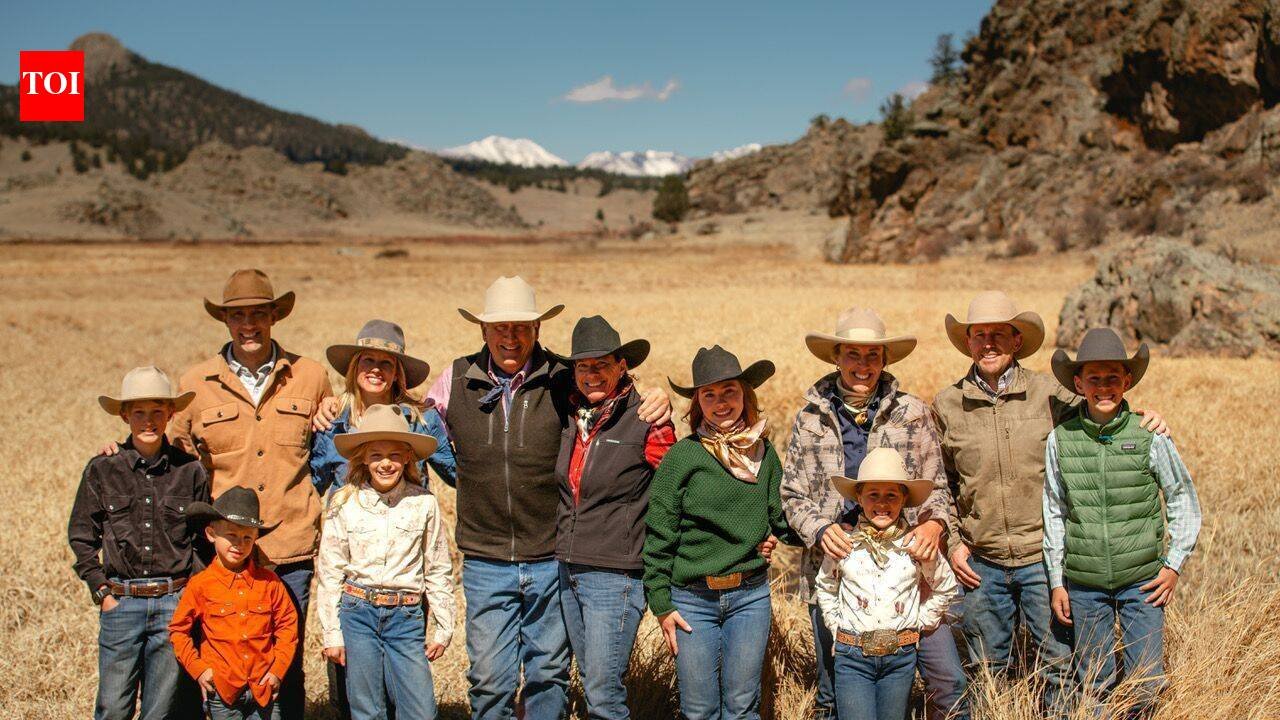
Eagle Rock Ranch in Colorado’s Park County has undergone a major transformation since Dave and Jeannie Gottenborg took ownership of the property. What they inherited was a badly damaged working ranch, with muddy corrals, cut creekside willows, worn-out fencing and hay fields managed in ways that harmed wildlife, soil and water. Over the years, the couple began repairing the land while continuing to run cattle, gradually changing how the ranch handled water, grazing, vegetation and wildlife. Their work has now earned Eagle Rock Ranch the 2026 Colorado Leopold Conservation Award, recognising its approach to conservation.
How did the damaged Eagle Rock Ranch begin its transformation
According to the Sand County Foundationthe Gottenborgs became owners of Eagle Rock Ranch about 15 years before the 2026 award. The property was described as a wounded landscape, with corrals that were knee-deep in mud and manure. Creekside willows had been removed to make room for more hay, while hay fields were repeatedly mowed close to the ground.Those practices created problems beyond the appearance of the ranch. The Sand County Foundation says they were detrimental to wildlife, soil health and water quality. Fences were also regularly damaged by migrating elk, despite earlier attempts to keep the animals away using propane cannons.The condition of the property meant the new owners had to address basic problems before building a more sustainable system. They removed rubbish and rotting corrals and began restoring vegetation with native grasses. Old, rusty barbed wire was replaced with fencing designed to be safer for wildlife.
Major changes that helped in recovering the land
One of the changes involved the way hay fields were managed. Instead of cutting the vegetation completely short, the ranch leaves enough hay stubble standing to trap blowing snow. According to the Sand County Foundation, this also helps in slowing down erosion and allows more water to enter the soil, improving its condition.Water management was also redesigned. Clean water from a settling pond is now carried to the hay fields through an underground culvert system. A solar-powered pump supplies fresh drinking water through miles of underground pipe to 10 stock tanks.The positioning of those tanks has allowed the Gottenborgs to use rotational grazing. Rather than concentrating cattle in the same areas, the system helps spread grazing pressure across the ranch. The Sand County Foundation says this increases forage availability while reducing the impact of livestock on the land.
How is wildlife benefiting from the ranch’s changes
The restoration has also reached the ranch’s creek and surrounding habitat. The Sand County Foundation reports that the creek now runs clean and supports abundant fish following erosion-control work and the addition of fish habitat structures.Hundreds of willow saplings have been planted along the waterway. They help hold the soil in place while providing shade for trout. The ranch has also installed screens on irrigation ditches to stop fish from entering them, while fish ladders give trout better access to spawning areas.Wildlife protection extends beyond the water. Every stock tank has a ladder intended to prevent birds from drowning. Bird houses were installed to encourage Mountain Bluebirds to return, while bat houses provide places for bats that can contribute to pollination and mosquito control. Owl boxes were also added to support natural rodent control.
Ranch’s work extend beyond its own boundaries
The Gottenborgs’ conservation work has not been limited to Eagle Rock Ranch. According to the Colorado Cattlemen’s Agricultural Land TrustDave Gottenborg initiated discussions that eventually produced the nation’s first elk migration agreement.The voluntary programme was developed with the Colorado Cattlemen’s Agricultural Land Trust and the Property and Environment Research Center. It uses private funding and incentives to compensate landowners who allow elk and other hoofed animals to move across their properties.The arrangement has since attracted interest among cattle ranchers and other landowners across the American West. Eagle Rock Ranch also hosts research into elk and deer crossings along county roads and highways. Working with the Property and Environment Research Center, researchers use trail-camera data to examine whether wildlife-friendly fencing can encourage elk to cross roads at safer, designated locations.
Ranch and its wider wildlife community
The Gottenborgs have also taken steps to understand the range of life already present on their property. The Sand County Foundation reports that Dave invited the Colorado Natural Heritage Program to survey and catalogue the plants, birds and invertebrates found across the ranch.Instead of focusing only on cattle, fields or individual wildlife species, the survey looks at the wider biological community sharing the landscape.The changes have also supported the ranch’s economic side. Their daughter, Erin Michalski, returned to the family business after working as a Wall Street investment banker. She took responsibility for finishing, processing and marketing beef sold through the ranch’s retail shop and online.
Years of conservation work bring Eagle Rock Ranch a major award
On 20 April 2026, the Colorado Cattlemen’s Agricultural Land Trust announced that Eagle Rock Ranch had been selected for the 2026 Colorado Leopold Conservation Award. The award recognises farmers, ranchers and forestland owners who make significant efforts to improve soil health, water quality and wildlife habitat while managing working land.Dave and Jeannie Gottenborg received the award at the Colorado Cattlemen’s Association’s annual convention in June, along with a $10,000 prize. A property once marked by damaged fences, degraded vegetation, muddy corrals and stressed waterways has been reshaped through changes made over many years.