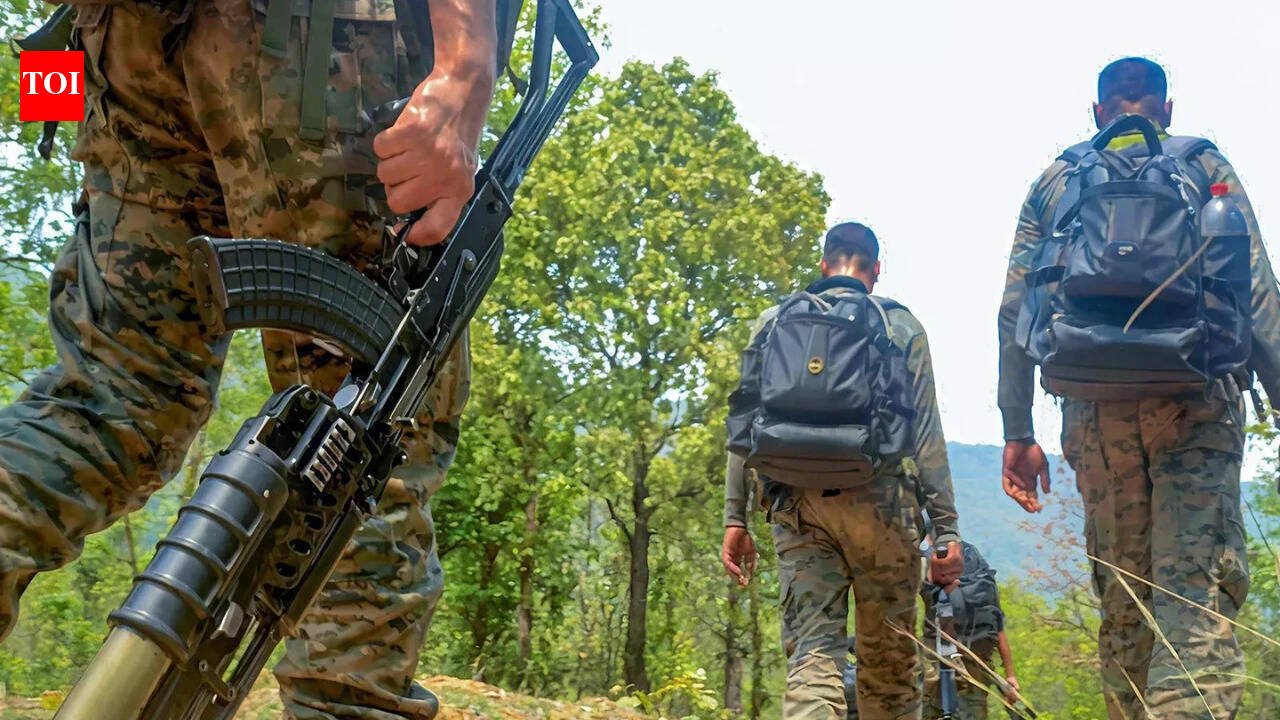

 federal minister of interior Amit ShahAs the spearhead of the anti-Naxal strategy, speaking in the Lok Sabha on Monday, he took pains to debunk the popular narrative that lack of development is a key factor in the Maoist surge. In fact, he argued, it was their rise that ensured the expansion of development plans skipped the red corridors.The focus on development initiatives in Maoist-centric tribal areas thus parallels the government’s anti-Naxal campaign with an intensified security crackdown.It cleared nearly 18,000 kilometers of road projects in affected areas, as insurgents often used improvised explosive devices (IEDS) on unpaved roads, while ensuring ease of movement for security forces and villagers. Shah pointed out that more than 12,000 kilometers of roads have been constructed. More than 5,000 mobile towers have also been installed, connecting many unconnected remote areas with modern communications, making it easier than ever for locals to connect with the wider world.Thousands of bank branches, ATMs and post offices were set up, more than 250 Eklavya tribal schools were opened, and health camps were organized regularly in remote areas. In addition, hospitals were opened in some places, allowing the tribal people to experience government welfare services on an unprecedented scale. This helped to loosen the grip of the Naxalites on the tribals, who were often their only, if not limited, source of help.The Modi government’s development initiative for aspirational regions, namely schemes targeting areas with backward socio-economic indicators, has also come in handy.The Maoists, who had earlier blown up schools or water tankers, were forced to fight for their survival as security forces coordinated with state police to put pressure on them while locals benefited from the developments.Chhattisgarh Chief Minister Vishnu Deo Sai said in an interaction that Maoist Sidma’s mother was also receiving treatment at a government hospital.In his speech, Shah said that the spread of Naxalism was not due to poverty but on the contrary, blaming its rise on left-wing ideology and stating that communists were inspired by “foreign” ideas. He said the Maoists chose the Red Corridor not to fight discrimination but because the government’s presence was weak.Shah criticized the BJP’s opponents, including the Congress party, for targeting the long-standing Naxalite rule, claiming that the National Advisory Council, chaired by Sonia Gandhi, was filled with Naxalite sympathizers.