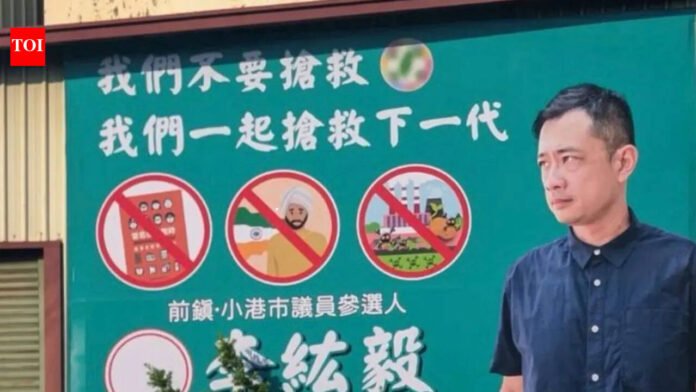
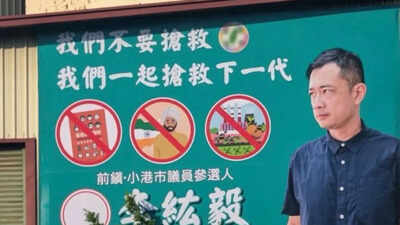
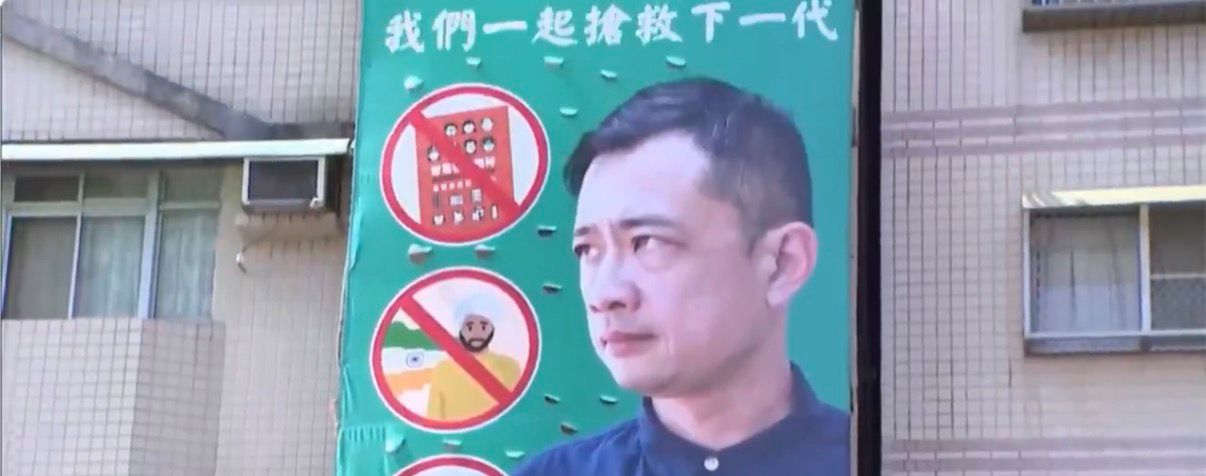
A candidate in Taiwan’s upcoming local body elections put up a billboard depicting a turbaned man with a “no entry” sign, upsetting the island’s small but growing Indian community and drawing a sharp rebuke from one of the country’s top officials.The placards were erected about two weeks ago in Kaohsiung City by Li Hongyi, the current mayor of Xiaogang District Gangming District, who is running as an independent candidate in the November city council election. The images were widely circulated on Taiwanese social media.
.
When asked by local media, Mr. Li’s attitude was clear. He said he was not against all immigrant workers, just Indian immigrants. The statement drew an immediate response from Taiwan’s longest-serving former foreign minister and current secretary-general of the National Security Council (equivalent to India’s national security adviser) Joseph Wu.It shames me to see local politicians doing this to attract attention. I condemn this despicable behavior in a very welcoming society. “I will continue to work hard to strengthen mutual cooperation between Taiwan and India,” Wu said. Lee was unavailable for comment despite attempts to reach him.Indians currently living in Taiwan — numbering just over 7,000, according to the National Immigration Agency, making up the island’s ninth-largest group of foreign residents — say the billboards are disturbing but not entirely surprising. “This appears to be an extension of anti-India propaganda on popular social media platforms like Taiwan’s TikTok and Threads, driven by certain countries that are not conducive to India’s interests,” said Arpita Biswas, a marine science research scholar at National Taiwan University who has lived in Taiwan for five years. She added that Taiwanese society is largely welcoming, but there is a small group of people who are hostile to Indians, and that hostility is amplified online. “We see anti-India propaganda posts almost every day. These posts are largely driven by limited human contact and lack of understanding of Indians and their culture,” she added.An engineer who has lived in Taiwan for four years and spoke on condition of anonymity said anti-India sentiment has so far remained confined to social media rather than spilling over into daily interactions. “We haven’t faced any direct racism from anyone here. But we can definitely feel the undercurrent on social media, with Indians being targeted by racist posts from vested interests. This candidate appears to be trying to capitalize on this trend to appeal to younger voters,” he said.